RE: Signage Regulations
Purpose:
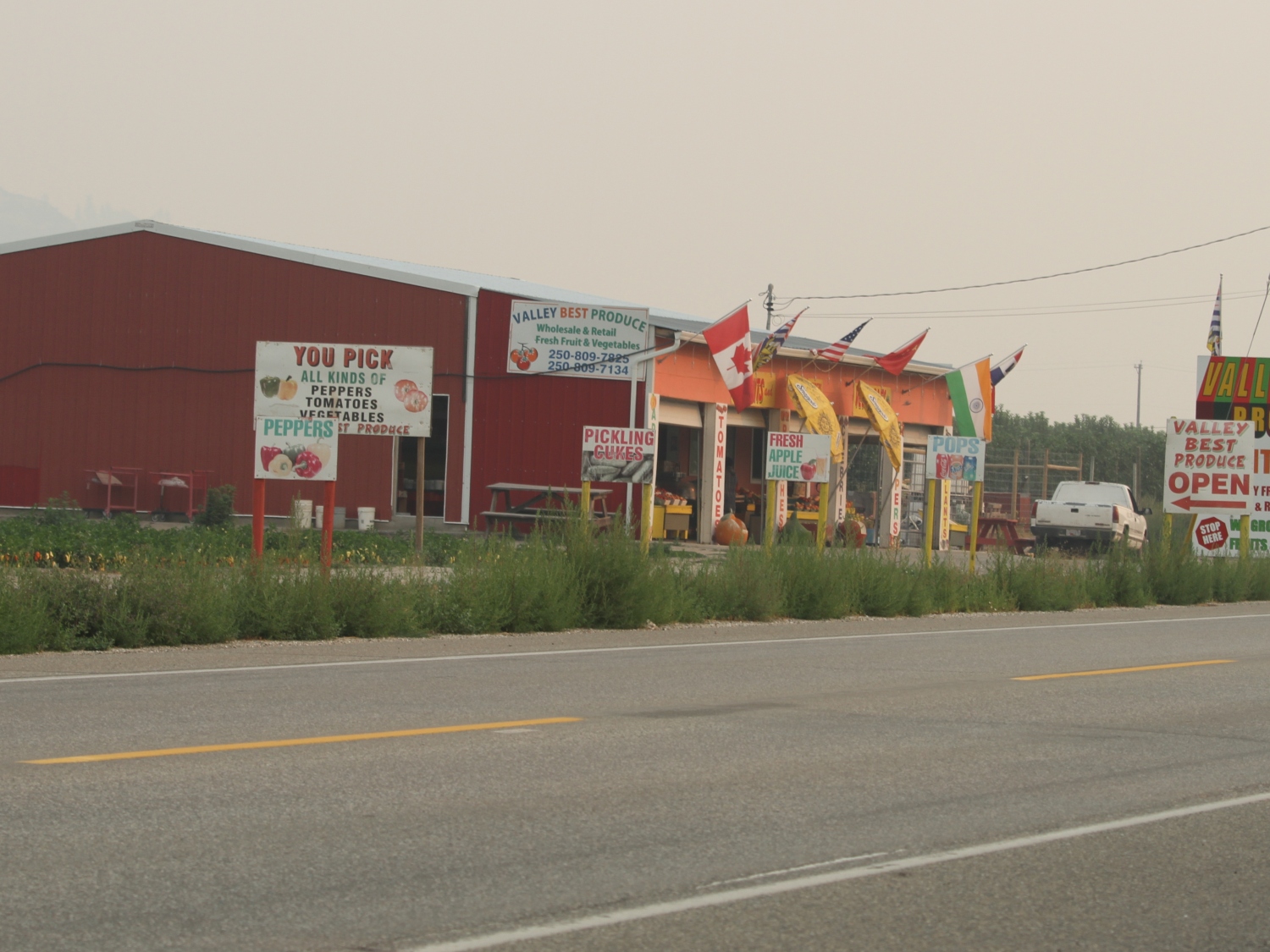
The Regional District Board is seeking input from the Okanagan Valley Electoral Area Advisory Planning Commissions (APCs) regarding proposed revisions to the zoning regulations that govern the placement of commercial signage on a parcel.
Background:
Under Section 330 (Regulation of signs and advertising) of the Local Government Act, the Board “may, by bylaw, regulate the erection, placing, alteration, maintenance, demolition and removal of a sign, sign board, advertisement, advertising device or structure, or any class of them.” Zoning Regulations governing the placement of commercial signage have been in place since many of
the first Electoral Area zoning bylaws were adopted in the early 1970s. The basic structure of these regulations have not changed substantially over the past fifty years, apart from a revision which began to be implemented in the mid-1990s and resulted in a variable standard for fascia signs being replaced with a prescriptive standard.
In 2014, the Board initiated an update of signage regulations in the Electoral Area zoning bylaws, specifically, those governing the placement of commercial signs on agriculturally zoned parcels. This project was subsequently abandoned in 2015 following public input and feedback from the Ministry of Transportation and Infrastructure (MoTI) that it would not be enforcing its regulations in relation tothe placement of signage in highway road reserves.
At its meeting of August 1, 2019, the Board approved a Development Variance Permit (DVP) to allow for new signage advertising the sale of farm products at 5535 Hwy 97 (Electoral Area “C”) and further resolved “that on adoption of an up to date bylaw [emphasis added] that this and all other signage in the area be brought into compliance.”
At its meeting of July 22, 2021, the Planning and Development (P&D) Committee of the Regional District Board resolved “that Draft Section 9.0 – Sign Regulations be referred to the Electoral Area Advisory Planning Commissions (APC).”
Analysis:
For many local governments, the regulation of signage is motivated by a need to ensure public safety
and minimize the negative visual impacts of signs in a community. The impact of one business sign is
rarely the issue, rather it is the long-term cumulative impact of many, many signs. Efforts to remove or otherwise limit signage can be controversial as such signs are relied upon by businesses to inform the public about their location and are a relatively low-cost form of advertising.
Yet, surveys completed by other local governments have found a connection between good signs and
positive consumer perception as people will judge a business by its signs and view a business’ signage
to be reflective of the quality of the products and service it offers. These surveys have also found that poor signage can deter consumers from entering a business, as too much and poorly designed or brash signage is equated with cheapness and as an indicator of poor quality. Consumer perceptions of value and their patronage of a business are heavily influenced by a store’s look and feel, which defined in large part by its exterior signage.
Despite these findings, attempts to regulate signage can be complex as issues ranging from freedom
of expression and business promotion to safety and community aesthetics can arise, as was
experienced when the Regional District last considered reviewing signage regulations in 2014.
In addition, drafting effective sign regulations can be very difficult because of the enormous range of
sign types that exist and the continuous innovation that occurs in the advertising industry (NOTE: in
the member municipalities, signage regulations generally comprise their own bylaw that can run
upwards of 39 pages in length).
While a comprehensive review of the signage regulations in the Electoral Area Zoning Bylaws is seen
to be beyond the scope of the current project, Administration considers there to be merit in making a
number of minor updates and clarifications to improve ease of use and introduce limited new
allowances.
Agricultural Signage:
Further to the proposed amendments considered by the Regional District Board in 2014, it would be
beneficial to increase the amount of signage promoting an agricultural use on the basis that the
current regulations are restrictive:
Sign Regulation Current Proposed
Maximum Number 1
1 fascia
1 freestanding
Maximum Area 3.0 m2 (all)
5.0 m2 (fascia)
5.0 m2 (free standing)
Maximum Height 3.0 metres 4.5 metres
Commercial, Industrial and Administrative/Institutional Signage:
The intent of the current commercial signage regulation was to limit the overall amount on a site to
no more than 23.0 m2; however, the wording of the regulation suggests that each of the 2 permitted
signs may be 23.0 m2 in area.
For comparison purposes, the District of Summerland restricts free-standing commercial signs to 9.0
m2 on parcels with a street frontage greater than 15.0 metres, while the City of Penticton restricts
free-standing signs to 1.0% of the total area of a site to a maximum of 15%.
Accordingly, the Regional District’s allowance for free-standing signs to potentially be 23.0 m2 in area is seen to be an outlier. In response, it is proposed that the maximum area be clarified by delineating the allowable advertising space between fascia and freestanding signs:
Sign Regulation Current Proposed
Maximum Number
1 fascia 1 fascia
1 freestanding 1 freestanding
Maximum Area 23.0 m2 (all)
25.0 m2 (fascia)
5.0 m2 (free standing)
Maximum Height 6.5 metres 6.5 metres
The proposed amendment would allow for a minor increase in the area of fascia signs while limiting
the area of free-standing signs to 5.0 m2.
The current zoning regulations do not specify the amount of signage permitted for industrial uses and,
to address this, it is proposed that the same signage regulations for commercial uses be applied to
industrial uses.
Finally, and due to the similarities and overlap with the commercial and industrial signage regulations,
it is further being proposed to standardize the regulations for administrative/institutional uses with
these other uses.
Residential Signage:
Signage in residential zones is generally restricted to permitted accessory uses such as a bed and
breakfast or home occupation and, due to the character of these areas, very limited in scale. The
changes that are being proposed are considered to be minor in nature:
Sign Regulation Current Proposed
Maximum Number 1 1 fascia
Maximum Area 0.6 m2 0.5 m2
Maximum Height Not applicable Not applicable
Prohibited Signage:
The current signage regulations prohibit the following types of signage:
• third party advertising;
• illuminated signs in all zones, except the Commercial, Industrial and Administrative and
Institutional and further requires that illumination be internal to the sign (i.e. not external, such
as through the use of spotlights); and
• Flashing, oscillating, moving lights or beacons.
It is proposed to modernise this language and to include signage types that were not common when
the regulations were last reviewed, such as inflatable signs, electronic changeable copy signs and
signs on or in the major lakes (i.e. Okanaga, Skaha, Vaseaux and Osoyoos).
Signage Exemptions:
It is being proposed to maintain the current exemptions for political election signs and real estate
advertising the sale or rental of a property, and to add to this list the following:
• all signage within a provincial highway right-of-way approved by the Ministry of Transportation
and Infrastructure (MoTI) under its “Service & Attraction Sign Program”; and
• murals.
Administrative Recommendation:
THAT the APC recommends to the RDOS Board of Directors that the proposed signage regulations be supported.
Options:
1. THAT the APC recommends to the RDOS Board of Directors that the proposed signage regulations be supported.
2. THAT the APC recommends to the RDOS Board of Directors that the proposed signage regulations be supported with the following amendments:
i) TBD
3. THAT the APC recommends to the RDOS Board of Directors that the proposed signage regulations not be supported.
______________________________
Chris Garrish, Planning Manager