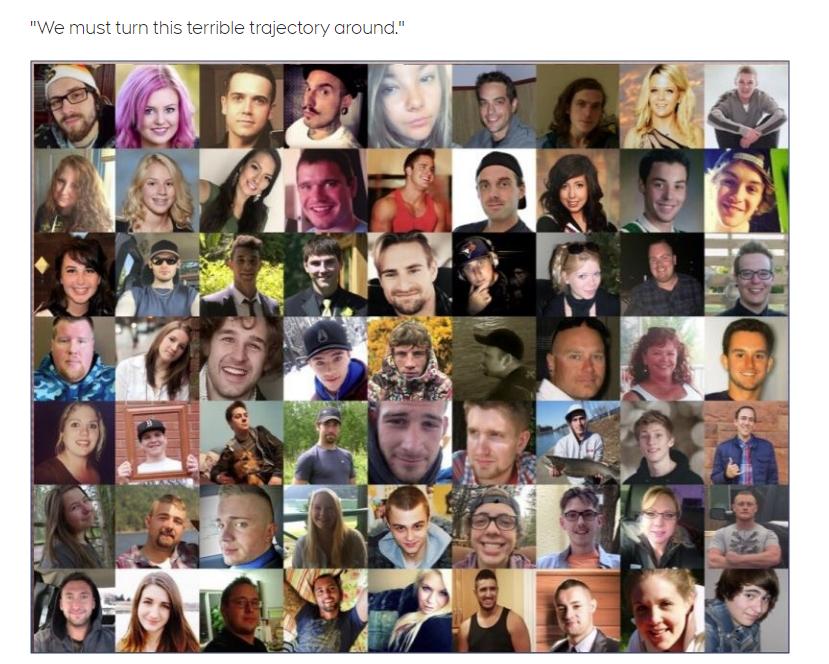
Above a collage of pix of persons who died supplied by the BC Coroners Service
Following a record-setting year in 2020, the BC Coroners Service reports 165 suspected illicit drug toxicity deaths in January 2021, the largest ever number of lives lost due to illicit drugs in the first month of a calendar year.
͞These figures are heartbreaking, both in scale and for the number of families who are grieving the loss of a loved one,͟said Lisa Lapointe, chief coroner, BC Coroners Service. ͞In the fifth year of this public health emergency, there is virtually no community in the province that has not been touched by this devastating loss of life.
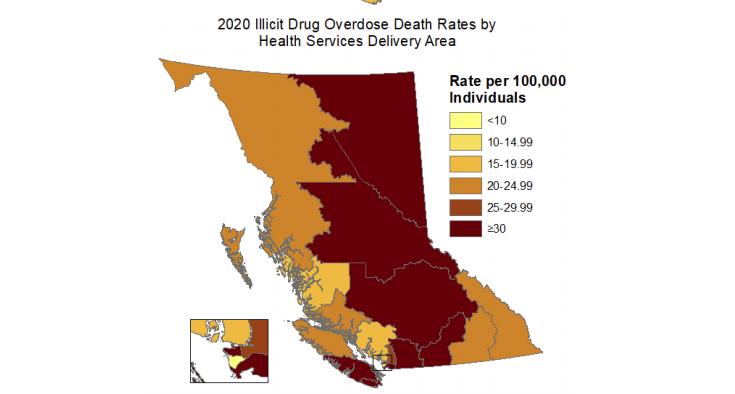
An average of 5.3 lives were lost each day in January due to the toxic drug supply in B.C., a death rate of 38.1 per 100,000 residents. January is also the 10th consecutive month in which more than 100 deaths were attributed to suspected illicit drug toxicity.
Almost one in five of the suspected deaths (18%) in January noted extreme levels of fentanyl concentrations (greater than 50 micrograms/litre), the largest number recorded to date. Additionally, there were 14 deaths in which carfentanil, a more lethal analogue of fentanyl, was detected, an increase from the December total of nine and the largest monthly figure since May 2019.
The report also notes recent increases in the presence of unprescribed benzodiazepines and its
analogues, including etizolam. Since July 2020, etizolam has been identified in 31% of illicit drug
toxicity deaths where expedited testing was performed. In January, benzodiazepines and its analogues were detected in nearly half (49%) of all samples tested. The addition of etizolam to fentanyl increases the likelihood of overdose due to the combined respiratory depressant effects. Etizolam is not licensed in Canada.
We are particularly concerned about the toxicity of the drugs detected in many of the deaths recorded in January said Lapointe.
The findings suggest that the already unstable drug supply in B.C. is becoming deadlier, underscoring the urgent need for supervised consumption options, prescribing for safe supply, and accessible treatment and recovery services.
No deaths have been reported at supervised consumption or drug overdose prevention
sites.