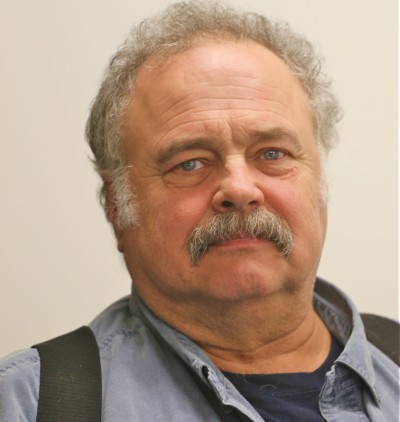
The last few months have been interesting to say the least. With the covid-19 infection the RDOS has had to develop a whole new way of doing its business. Just to add to the load the RDOS computer system was hacked in August and is just lately slowly being returned to normal.
The covid-19 outbreak created a situation where the Loose Bay agricultural camp was brought to the attention of the Provincial Government and created an understanding of how vital this type of facility is. The Province has now invested in this camp and it is my hope that this will provide a much needed tax break in the upcoming budget year.
There has been some progress on formalizing the river channel as the official hike and bike way. The applications for tenure have been formalized and I am told it can take up to two years to complete. This route is falling into disrepair and is in need of maintenance and upgrading which cannot be done without this consent and it is my hope that this can be brought home soon.
Areas B, C, and G are in discussions about joining the Similkameen and South Okanagan hike and bike trail through the Fairview corridor. If this is possible it would have to be up for consideration prior to the proposed National Park.
Ministry of Transport, MOTI
This area gets lots of requests throughout the year which get passed on when we meet with AIM road maintenance and MOTI.
Some of these are; passing lane issues, corner vision issues, abandoned vehicles, signage for bicycles, Seacrest Rd pedestrian warnings, road maintenance, and the ever popular snow removal issues. There is also a request to raise the east branch of Park Rill Road a few inches as a way to reduce damage done by tire wash during the flooding season.
We did receive a request to submit a major project for stimulus funding. The projects were to be MOTI related. For this I submitted a project of installing segregated bicycle lanes on a number of our agricultural back roads. Many of these are becoming very busy with farm equipment trucks, tractors, livestock, and sightseeing tourists. Adding an ever increasing number of bicyclist and we have been very lucky to not have seen a tragic incident as of yet. The roads I submitted for consideration for this funding were Sumac (#7 road), Black Sage Road, White Lake Fairview Road, and Green Lake Road.
UBCM
The UBCM convention was done on line this year. I had three ministerial meetings this year. Ministry of Environment and The Ministry of Agriculture
To get a commitment to encourage the use of Air Trench and Air Curtain burners for forest fuel reduction and agricultural burning. This equipment reduces the smoke produced from these necessary burns to a point of near elimination. The current system fills the valley with smoke while these burns are being done. I realize the absolute necessity for these burns and as I suffer from a severe lung condition I am one of many people eager to see a solution. Air Curtain and Trench burners would definitely provide that solution.
I was pleased that the Ministry of Agriculture took very positive interest in the proposal and hope to have meetings with them in the near future now that the election is over.
AGRICULTURAL
ALC EXPANDING NONFARM USAGE ON FARM LANDS
The proposal
The purpose here is to slow expansion of corporate farming and provide economic opportunity for small family farms. This will provide and maintain a wider variety of crops expanding our diversity which is advantageous both to our hospitality and tourist industries and to the local food sustainability programs. Corporates shy away from anything but the highest yield and this has been putting stress on crops like tree fruits and berries and vegetables.
Looking for this as a pilot project. Area “C” or larger as seen fit to form a conclusion. Applying to small farms say 25 acers or less. (of farmable land) an evaluation would have to be made on some properties.
Family/multi family owned (or leased).
The farm part of this equation must be producing food crops only as can be define by the ongoing Kwantlen Polytechnic University study on food sustainability. The Farm portion must be commercially producing or preparing for production (clear for; or replanting). The farming operation must be continuously maintained and function as a working farm. ( that definition would have to be documented in the original application, ie production levels, income etc.) Farm product can be used in the nonfarm usage but must be tracked and valued at current market value. The nonfarm usage cannot permently alter any farmable land. The usage would not allow for any larger permanent structure coverage other than is currently allowed.
The thought is for the RDOS to tie the usage to the property owner(s) and not to the land. This would be done by Temporary use permits. In this manner if ownership changed the transfer of this use is not automatic or guaranteed. If the ALC was to adopt the same or similar TUP permit system for this project it would give both entities oversight and enforcement.
FLOOD MITIGATION
This was a proposal that I put forward last year that was accepted but never grew momentum. This is important in this area so I resubmitted this year and it felt to be a bit more positive and it was apparent that some consideration had been given to this over the past year. Permit system for work in creeks and streams crossing private properties.
As a result of the 2018 flooding event in the South Okanagan it has come to light that the permitting system that allows property owners to clean out silting of creek beds or replace culverts that were removed during flooding from creek beds crossing their private properties is deeply flawed.
I am referring primarily to ephemeral creeks and streams. The permitting system has become overly costly, onerous in non-essential detail and thus costly beyond the realm of reason to attain.
Left to their own creeks and streams will slowly build up silt and change course. When dealing with inhabited areas this is undesirable so rises the need to maintain the bed depths and direction on a regular basis.
Flood events speed this process considerably and also cause the need to remove existing culverts that will plug and may not be able to accommodate the increased flow during these uncommon events. At the conclusion of these events it becomes necessary to quickly replace the culverts to allow residents to return to normal life, it is also necessary to return the creek or stream to its original bed depth to prevent the stream from changing course. As these actions constitute returning properties to the pre flood condition no permits should be required, silts removed can be used to further berm the creek or stream or removed.
THE REQUEST
The request is to remove creek and stream maintenance from the permitting system and control the process through a reasonable regulation system, this would also include the replacement or upgrade of culverts.