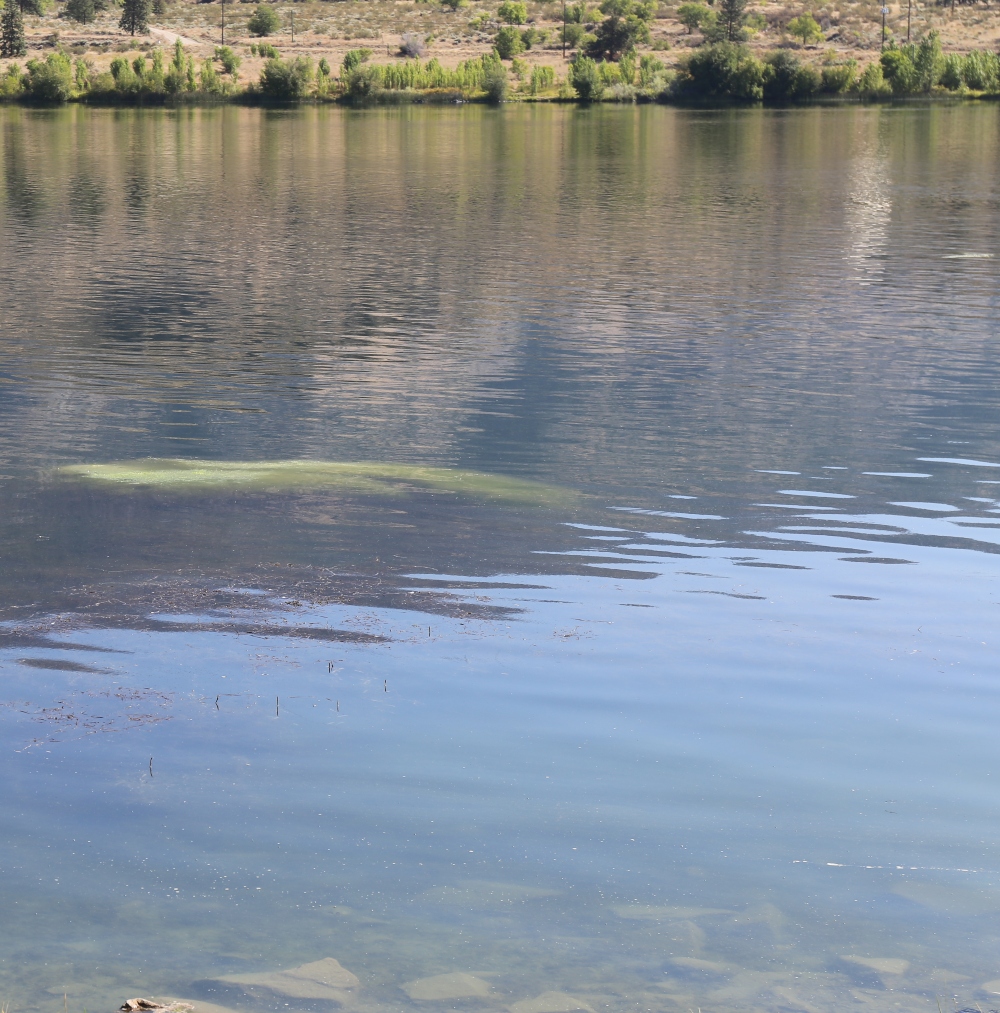
Note to readers:
Several inquiries as to what is a algae bloom, dangers etc. This writer swims in Tuc el nuit at least 2 times a day during the summer months….
The following from the Okanagan Basin Water Board website:
Certain species of algae produce toxins that can cause death within 20 minutes of ingestion.
Cattle and domestic pets are particularly vulnerable because they’re less fussy about water colour and odour, but humans can also experience a range of symptoms from skin irritation to paralysis from exposure.
Provincial legislation requires that drinking water be safe, with a rigorous testing procedure. Interior Health water specialist Rob Birtles notes public beaches are tested regularly for E. coli.
But for algae the process of identifying a bloom near a beach and having it tested is a work in progress.
If toxic algae blooms are identified near a beach, the public* area may be closed.
At the request of the Okanagan Basin Water Board following a cyanobacteria bloom in Osoyoos Lake in 2013, the Province of BC has produced the Protocol for communities to respond to blue green algae blooms.
According to Rob Birtles, Interior Health has provided feedback to the Ministry of Health on their draft risk assessment tool for identifying and assessing algal blooms. Birtles states that separate protocols for recreational water and drinking water should include a list of consultants and labs that provide assessment and lab analysis, as well as a standard template for public advisories.
Blue-green algae, a very primitive form of aquatic plant, can acquire nitrogen from the air and their growth is often triggered by phosphorus pollution coupled with stable weather and warm water temperatures.
The one-celled organisms divide rapidly, forming a noxious, pea soup or oil slick appearance on the water. Wind or wave action can disperse the bloom. Only certain species produce toxins, but it’s not possible to identify them by sight, so lab tests are necessary.
Local aquatic biologist Heather Larratt says cyanobacteria are on the increase across Canada but knows about 13 different species in the valley’s water, some of which can adversely affect drinking water.