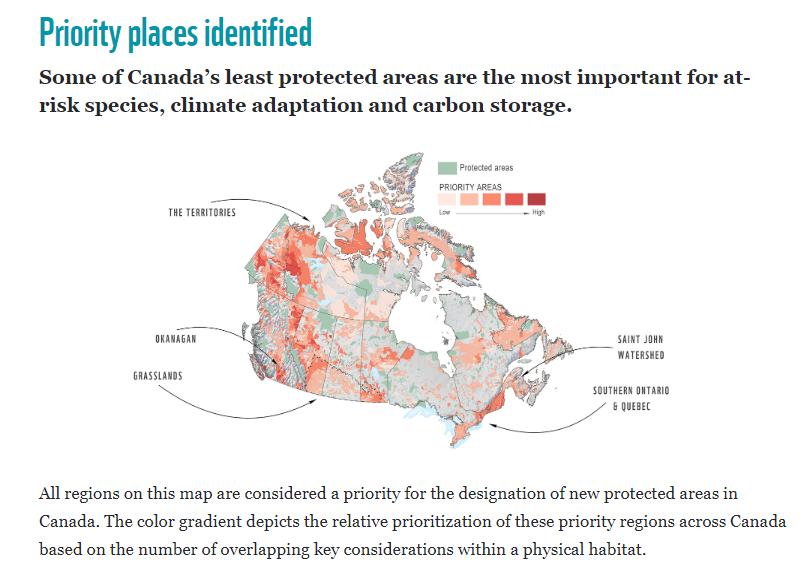
Okanagan
British Columbia’s southern interior is home to unique wildlife like the pallid bat and the desert nightsnake – species that thrive in the region’s hot, dry summers and mild winters. The mix of grasslands, forest, desert-like areas and rich riparian ecosystems provides highly diverse habitats that host many of the province’s at-risk species. Unfortunately, these habitats score poorly in our assessment of ecological representation. Expanding human population, and related road and housing infrastructure, and agriculture development have added pressure to the region where many stressed species have already been extirpated. In addition, the Okanagan is a species hotspot, and contains areas that have high levels of forest biomass and climate refuges.
Key findings
Species at risk – habitat is not being protected:
- 84 per cent of habitats with high concentrations of at-risk species are inadequately or not at all protected.
Across Canada we are not protecting the wide variety of physical habitats that wildlife need:
- 76 per cent of physical habitats in Canada are inadequately or not at all protected.
In particular, our protected areas do not safeguard critical species freshwater habitat including lakes, rivers and wetlands:
- 91 per cent of physical habitats do not have adequate protection of shorelines.
Finally, the vast majority of Canada’s carbon-rich habitats – those forests, peat bogs and soils that are storing significant amounts of carbon and preventing increased warming associated with climate change – have not yet been protected.
- 77 per cent of habitats with high densities of soil carbon are inadequately or not at all protected.
- 74 per cent of habitats with high densities of forest biomass are inadequately or not at all protected.
Source: World Wildlife Federation with no editing