By ROY WOOD
It’s clear that Osoyoos residents will be abandoning blue-bag recycling in favour of plastic bins come July.
The questions left to be decided are who will supply the bins and whether they will be the smaller, 121-litre containers or the 240-litre wheeled variety that lend themselves to automated collection technology.
After the July 1 deadline, any recycle bags left at the curbside will be left there along with a note to the homeowner about the requirement to use a bin.
In a report on Monday, operations director Jared Brounstein provided two options for town council to consider:
- The town would supply each single-family home residence with a 121-litre container, which would need to be carried to the curb. Under this option there would be a $110,000 capital cost and annual operating expense of $45,000, both of which would be passed on to taxpayers. OR….
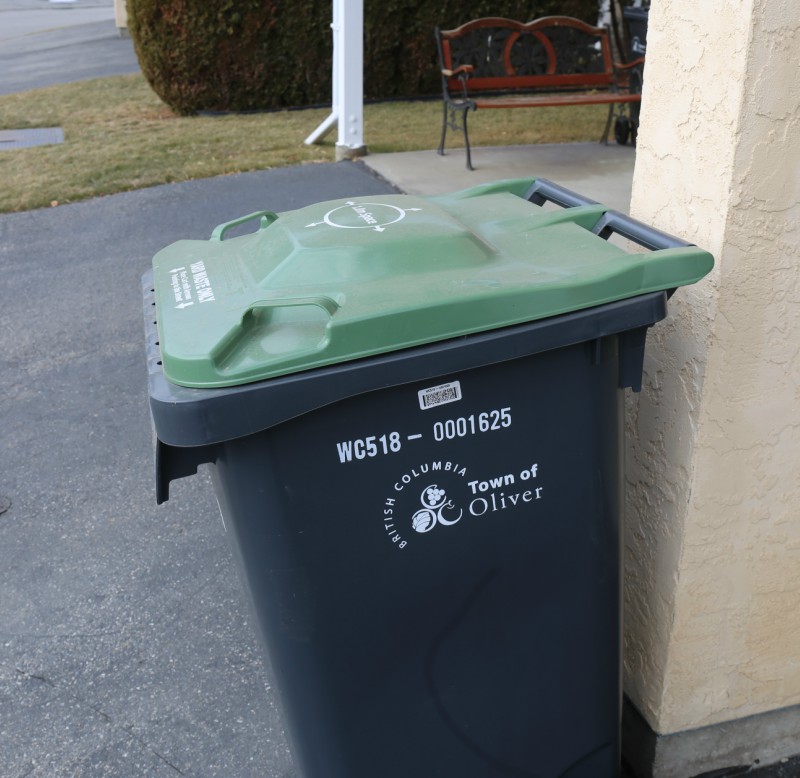
- The town’s waste collection contractor, Waste Collections of Canada (WCC), would rent 240-litre, wheeled containers directly to residents at an annual cost of between $24 and $30. These bins would be the type that can be lifted and dumped into the garbage trucks using mechanical arms.
The report noted that under the second option, some homeowners might “seek to avoid this additional cost and no longer recycle and instead put recyclable items in their garbage container. The town should try to avoid that happening as it will impact landfill operations, life expectancy and costs.”
Councillor CJ Rhodes – who attended the meeting via teleconference from Yuma, Arizona – pointed out that the automated system of collection is the wave of the future and that going with the smaller, hand-emptied bins would be “investing in old technology.”
Councillor Brian Harvey said it’s hard for council to make an informed decision without a longer-term estimate of the impact on taxpayers for either of the options presented.
Councillor Jim King pointed out that an earlier survey of opinion showed nearly two-thirds of residents prefer the town-supplied option. However, he suggested the town might consider the 240-litre bins in order to avoid having to replace the smaller ones down the road when automated collection is inevitably introduced by WCC.
Brounstein conceded that in the long term it would be more expensive to purchase the small bins next year and then replace them later with the larger ones.
Mayor Sue McKortoff told Brounstein: “As you can see, we’re all a bit confused.”
He agreed to come back to council early in the new year with a 20-year projection of costs to the taxpayer for the various options, including the town supplying the larger bins.
Eventually, town residents will be faced with bringing their waste to the curbside in three separate bins: garbage; recycling; and yard and garden waste.