By Roy Wood
Today is the final day on the job for Osoyoos chief administrative officer Barry Romanko.
He came to Osoyoos nearly 11 years ago after successful stints as a senior town manager in Jasper, CAO in Spirit River, Alberta and in the community development branch of the Alberta government. He announced his retirement several months ago.
Romanko sat down with ODN’s Osoyoos council reporter Roy Wood recently to reflect on his tenure here and the prospect of retirement.
The interview has been edited for clarity and length.
ODN: What’s the one accomplishment about which you are most proud?
BR: There’s been a lot of projects that we have accomplished in the community, but I think a big part of that is having a system in place to ensure that those are the projects the community wants. And they are community projects, not town projects.
When I look back, I was able to bring a systems approach to local government here. We initiated a business planning process that identified what areas we wanted to go into, and we developed plans for those various areas, like recreation or Resort Municipality Initiatives. And residents had the opportunity to provide input into those processes.
And then we carried them out. Far too often plans are developed but they’re not carried out. Our message was always that we are going through a planning process, but the goal is to complete these projects If you want to have input, attend these meetings.
ODN: What are some examples?
BR: The Gyro Park Project. We did an intensive three-day workshop. We had 30 people there; we sat down for three days and planned the project. And we implemented Phase 1. Phase 2 will be another planning process. We had a Phase 2 plan, but we did that five or six years ago and when they remove the museum there will have to be a revisit.
Resort Municipality planning. We went through planning processes with stakeholders and identified projects and we carried them out. Gyro Park is one example. There is also the trails system, which we are constantly developing. We improved the other amenities, like washrooms.
But the buildings are part of it. It’s important that we identify the projects the community sees as a priority. And those projects are both for the residents and visitors.
ODN: Was that systems approach part of what got you this job?
BR: Not really. That wasn’t the question in the interview.
Part of the interview process was there is always needs to be a very strong discussion of roles and responsibilities of the CAO and council. I was very adamant that role clarity is very important. The planning processes I learned in my other experiences.
ODN: What’s the biggest surprise ever got at a council meeting?
BR: The biggest surprise from one council to another was the shift on the airport. We had a council direction from one council (led by Mayor Stu Wells) that we were going to turn the airport into industrial lands, of which we have a significant shortage.
The next council (under Mayor Sue McKortoff) came in and made a shift, saying, “No, it will stay as an airport.” We were geared up move in that direction. That was a big surprise to me because normally councils more or less continue the direction of the previous group.
There will be a significant investment required in the airport. Council will have to look at its priorities. What role they play in that investment will have to be viewed from an economic perspective.
There are certain areas of the community who will be direct benefactors of that facility and so weighing the community investment versus what is the investment of the direct benefactors is important.
ODN: What is the key to a successful relationship between the CAO and council?
The key is trust. You build trust over the years. There are various ways. Part of it is open and honest communication and role clarity. You have to illustrate through example that you are doing what council wants you to do.
You bring ideas to the table.
It starts over with every new council. Every new council has one or two new members are you start over again finding out where the new council wants to go and developing the processes to that will enable them to get there.
ODN: Do you have a key bit of advice to successor?
BR: Not really. The successors will bring their own ideas.
This is a community that is capable of incremental growth, compared to other communities that may have booms. My sense is that in this community there needs to be a strong commitment to listening to local residents versus visitors, ensuring that the local residents’ needs are being met as well as the visitors. We’ve been fortunate in that the nature of the projects we’ve done have been able to benefit both.
ODN: What are some of the major challenges ahead?
BR: A new town hall will be a major project. It’s on the books this year as a feasibility study.
The whole area of housing is a challenge. There needs to be a strong role for local government. The town did receive that donated property on Cottonwood. We’re still working to bring that property on line. It should come to closure sometime this year.
Of course, a stumbling block for housing is availability of land. But that’s not the only challenge. Land becomes a minor problem relative to construction costs. And you have to recognize the role of local government.
First of all, making sure land is zoned for appropriate housing. If you have an active economic development department, they should be working to attract developers, working with government agencies like BC Housing.
At the Meadowlark development, for example, the town had land and we wanted housing on it. We tried to find a developer who would come in and buy the land, subdivide it, etc. But we couldn’t find that developer who wanted to take the risk.
So, we decided to be the developer. We invested to actually put in the services and make the lots available and then basically, we sold all the lots to one developer.
Peanut Pond on the other hand is a private development. We just go through our processes to make sure our standards are met, and the community gets appropriate amenities and that the character of the development will fit into the community.
ODN: What is the biggest obstacle facing economic development here?
BR: One obstacle is the seasonality of the community, which makes it difficult for businesses to keep employees going. The ability to build the shoulder seasons is really important to dealing with that issue.
The tourism industry is one thing. But other challenges involve keeping the development community going so you can keep the trades people working and those kinds of companies going so that we can create those other jobs.
ODN: What’s the most important thing this council needs to accomplish?
BR: What our water services is going to be a very significant decision. There is legislative pressure from Interior Health for us to chlorinate our water supply. There are three potential options facing us if we are going to have a treated water system: one is $12 million; one is $15 million; one is $20 million. There’s a constant pressure from IH and at some point, it will be irresistible.
A regional recreational facility, including a pool is also important, working with Oliver, the surrounding municipalities and the Osoyoos Indian Band to develop what would be a true regional facility. Personally and professionally, I see that as being an asset for the region and something that would really put this area on the map.
Failing the regional approach, I think we have to take a look at what we can do on our own to develop those types of amenities to attract people and retain them in the community.
This community of 5,000 is strong economically and it has a strong assessment base, which will continue to grow. We know that successful communities have certain amenities that provide for quality of life. Because it attracts business and professionals.
ODN: As you are leaving, what is one thing you’d like to say to Osoyoos residents?
BR: I would like to see a larger involvement in community processes. The opportunities are available to make your views known and put forward in public forums. This is your community. Accept that role as a resident and provide input.
For example, we are reviewing the Official Community Plan. This is the plan that sets the foundation for the community. The last one was done in 2007, a very different era, kind of the end of the boom times.
When we look at the new OCP there are some areas we will have to revisit in terms of how we approach working in the community.
Since the OCP was last done, there have been a number of different ways of looking at housing. I’m not advocating them, just saying what they are: cottage homes; lane homes; how we deal with AirB&Bs.
How we approach densification is also important. For example, we have some older properties along the highway. The value of those hotel properties become greater if we can go to more storeys.
Another important issue is how we deal with ALR lands in the town. Our ability to grow is very limited. We are bounded by a border, an Indian reserve, water, and soon to be a national park. What we do within the scope of what we have is really important.
We will probably have to look at policy directions that we haven’t done in the past, like tax freedom periods for developers. That’s a tool that other communities use that hasn’t been used here. Oliver used it for its hotel. It’s not the best tool, but it’s a tool. It has its place. Are we at that stage? That’s something that can be talked about in the OCP discussions.
The opportunity for people to have input is there. We are into the public consultation period on the OCP in September.
As someone who makes participation opportunities available, we really enjoy seeing more people there because we are working for them. Take advantage of the opportunity is what I would say.
ODN: Are you planning to stay in Osoyoos?
Yes. There was always the thought that it would be nice to retire in the Okanagan and the opportunity to come and work and develop some sense of roots and find out what the community is about and develop some friendships has been an important part.
There will always be the lure of family in Alberta, but it’s nice to visit. And it’s nice to have them visit us. We’re looking forward to staying in the community and maybe becoming more actively involved.
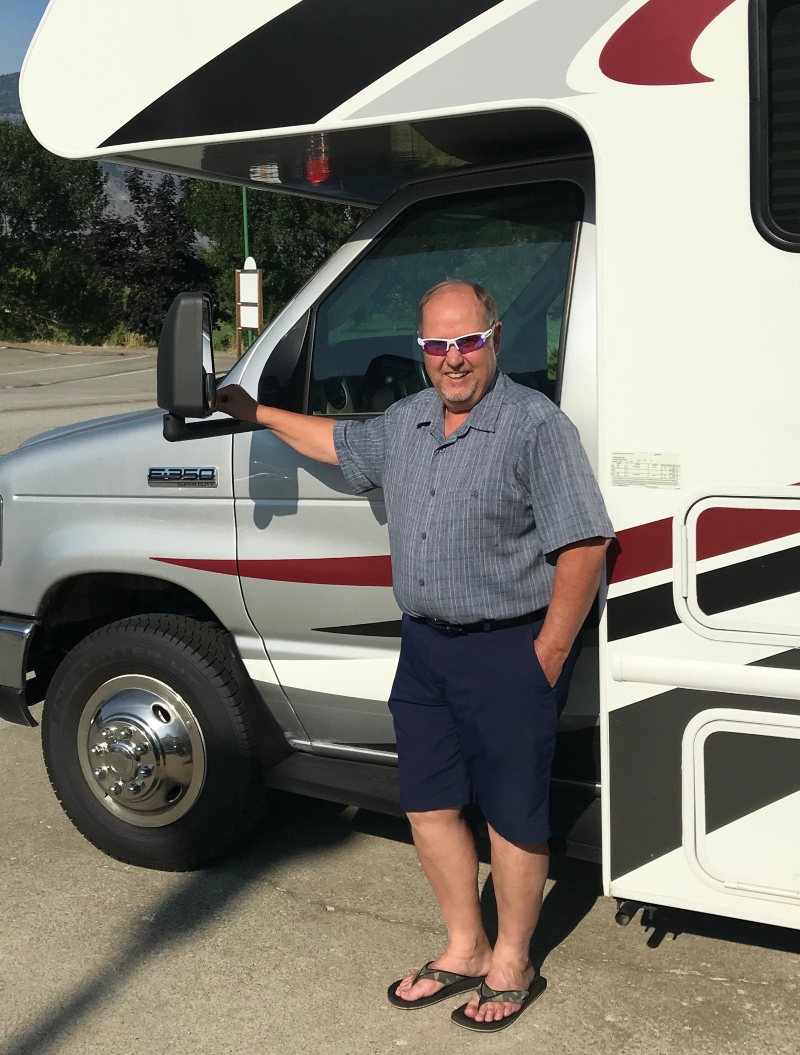
We’ll do some travelling, whether using the RV or some other areas that we want to take a look at. And being able to ski Baldy on weekdays when the snow is fresh will be great.
ODN: Any final thoughts?
BR: I’ve been able to work with some very, very good people. They’ve been supportive of myself and council. My sense is that we’ve worked together well and we’ve seen some positive changes in the community.
An important part of that was the Resort Municipality status that we gained that provides that additional income.
We’ve always tried within our budgeting process to show incremental community improvement, whether it be a road here, a road there or something else that shows the community we’re modernizing and we’re staying modern.