By ROY WOOD
Anyone interested in retailing as a Survivor series may like to keep an eye on the retail marijuana business in the South Okanagan over the next several months as at least nine contenders fight for survival in Oliver and Osoyoos.
Three applicants in Osoyoos and six in Oliver are at various stages of the approval process and will likely begin opening for business within months.
The processes differ between the two towns, but eventually both of them require both local and provincial approvals.
Osoyoos council decided early on to take a hands-on approach to managing the evolution of cannabis sales, employing a so-called “site-specific zoning” approach.
Each application to open a cannabis store must go through a re-zoning, which includes four approvals by council and a public hearing, at which members of the public may support or raise objections to the application.
The first three readings of such a re-zoning and the public hearing (which occurs between second and third readings) can take anywhere from a month or two to considerably longer.
In a separate process, the applicant needs to acquire a provincial licence to operate from the Liquor and Cannabis Regulation Branch (LCRB).
According to Osoyoos planning director Gina MacKay, “We won’t approve a rezoning until we’ve got confirmation from the province that the applicant has passed the ‘fit and proper’ portion of the application for the licence.”
Once the province grants the licence, the town moves to final adoption of the re-zoning bylaw, which clears the way for the would-be retailer to apply for a business licence.
Osoyoos Town Councillor Brian Harvey expressed some frustration on behalf of the applicants over the pace of provincial approvals: “These retailers invest money in their locations and then sit and wait and pay lease fees and leasehold improvements. The provincial process seems to be painfully slow for them.”
There are three active applications in Osoyoos, all of which have passed third reading and, said MacKay, “As far as I know all three of them are close to completing the fit and proper.”
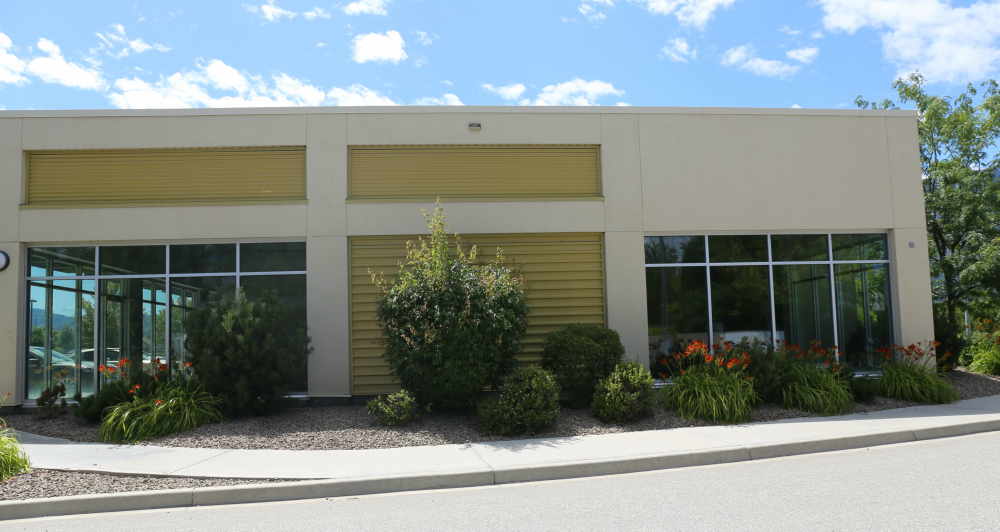
The three locations are: in the former Osoyoos Signs building just north of the recycling centre; on the north side of Main Street right downtown; and in the vacant storefront next door to the Dollar Store at Gateway Plaza.
An application for a store attached to the Owl Pub was turned down by council for customer safety reasons. A fifth, across from AG Foods on Main Street, received first- and second-reading approval on April 1 but was subsequently withdrawn by the applicant.
At that time, MacKay said her department was still getting inquiries, but when potential applicants heard there were up to five active applicants they tended to demure.
Mayor Sue McKortoff said in an interview that she encouraged MacKay to tell potential applicants, “You might want to hold off because there are five ahead of you.”
However, the mayor acknowledged that deciding to move ahead with an application is a business decision and it’s really not council’s place to interfere. “We don’t regulate the number of hairdressers and nail salons,” she said.
In a recent interview, Harvey said of the impending competition: “It’ll be interesting to see the market. … If all three of them get approved, which survives? It’s a classic Marketing 101 kind of scenario. Supply and demand, right? Somebody’s going to hurt, it seems to me.”
All of the applications in Osoyoos are from private concerns. The town last summer voted to not allow a government cannabis store, preferring to provide opportunities for local businesses.
And the province seems likely to accede to the town’s wishes. In a news release in the spring, the Liquor Distribution Branch said, “The LDB is committed to working with municipalities to understand and align with their bylaws and business requirements.”
Oliver chose to take a more laissez-faire approach, leaving the approval process more in the hands of the province.
Applicants may go directly to the LCRB seeking “fit and proper” approval. Oliver planning director Randy Houle describes the associated background checks and security screening as “a very detailed, thorough process … (which) can take a few months.”
The town still gets a chance to intervene, however, since the province requires some input. “The province won’t issue a licence unless they have a positive recommendation from the local government,” said Houle.

There are two proposals that have reached Oliver council for their recommendation: Bluewater Cannabis, slated for Main Street adjacent to the Pharmasave; and a government cannabis store planned for the Canadian Tire mall.
There is a 28-day public consultation process, followed by a council vote.
Oliver Councillor Dave Mattes believes the town’s hands-off approach is appropriate. “Oliver is treating (cannabis retailing) the same as every other business. It’s not up to council to decide what the market should or will do,” he said.
“Why would the town be involved in picking what business will and won’t survive. That’s not our role … to be picking favourites or anything like that.”
As for who the survivors will be, Mattes said: “I would suspect that at the end of the fallout there will likely be one, possibly two. The government store will survive no matter what … and there’ll probably one other at the end of the day when it all settles out.”
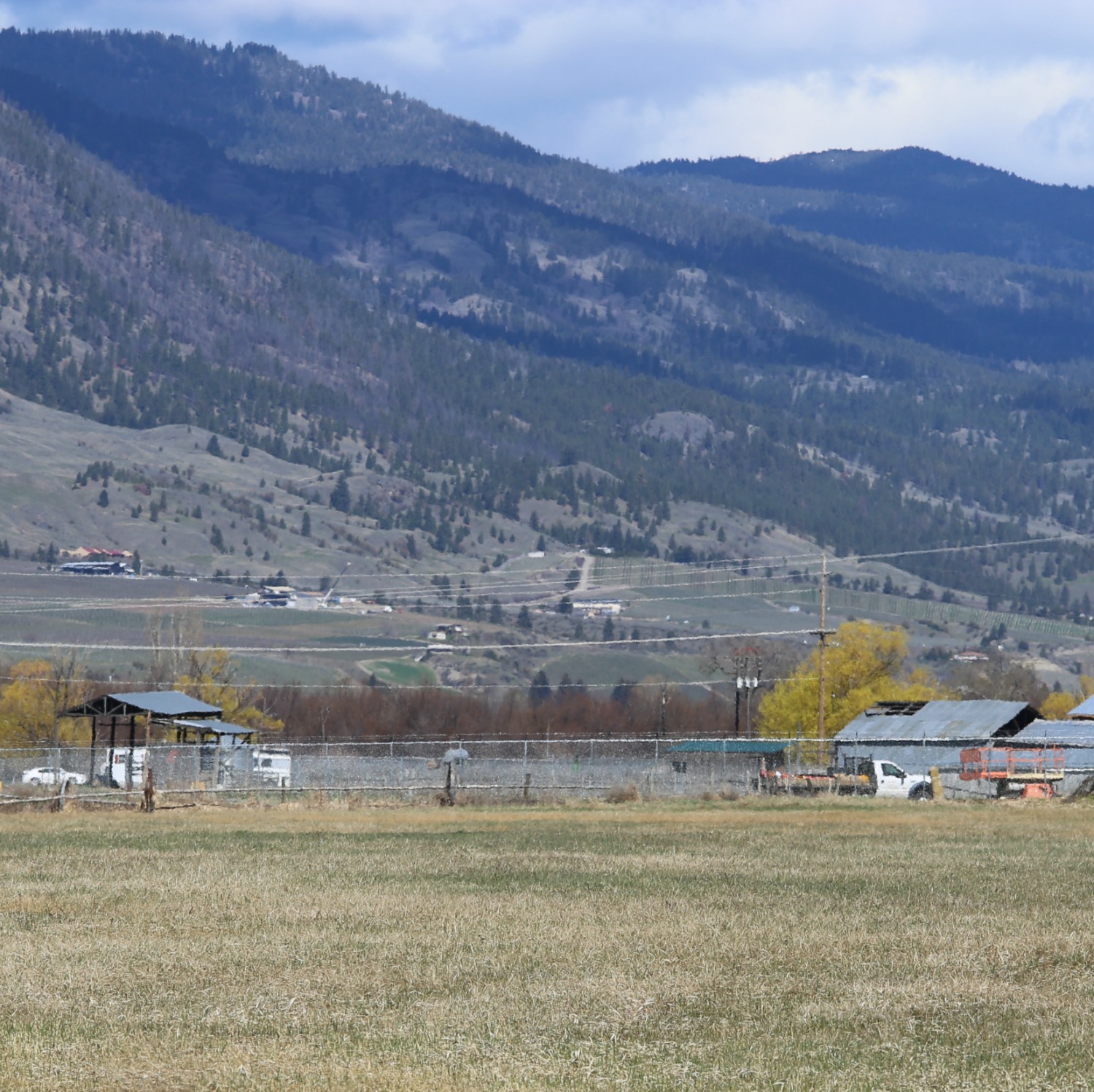
On the production side, Osoyoos is emerging as the indoor grow-op leader while the Oliver area is set to be the home of several outdoor cannabis plots.
There are two active applications for indoor grow operations in Osoyoos, both in the industrial area on Highway 3 across from the airport.
The cultivation applications in Osoyoos involve a slightly different process from retailing, in that there is no actual re-zoning, simply council approval of the addition use of the property.
One of the applications has been granted final approval by council and the other is likely to receive it at the August 19th meeting.
There was some concern at one of the public hearings about the possibility of odors emanating from the buildings. Said MacKay, “The requirements as far as odor control are very stringent and they’re covered at the federal government level. (It’s) not part of our jurisdiction. Health Canada makes restrictions on that.”
Aside from some security and infrastructure requirements, outdoor grow-ops don’t face many regulatory obstacles.
CannTrust Holdings Inc. announced this spring that it has closed the first of several transactions to acquire 200 acres of outdoor cultivation land. The company purchased four parcels totalling 81 acres, for outdoor cannabis cultivation.
ODN reported earlier that at least two separate lots in the Oliver area have been purchased near Rd 18 and Rd 21. ODN also reported that outdoor cultivation is not subject to regional district approvals.
CannTrust estimates that the additional 200 acres of land will eventually produce between 200,000 and 300,000 kilograms of cannabis annually.
A company news release indicated it has begun fencing the property and installing security systems and other infrastructure required for commercial production.