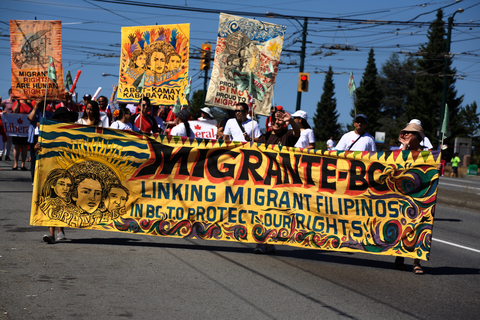
Domestic Workers fall through cracks in Employment Standards Act
Thousands of British Columbian families rely on migrant workers to provide in-home care for children, seniors, and adults with disabilities. The overwhelming majority of these workers are women who come to Canada from the Philippines, India, China, Mexico, and other developing nations, seeking to improve their lives and the lives of their families. They contribute essential labour to our society, caring for the most vulnerable and facilitating the full participation of Canadian workers in the labour market. But while here, they are vulnerable to exploitation and abuse.
Caregivers need and deserve the protection of British Columbia’s basic employment standards, but too often they are excluded.
The Employment Standards Act only protects “domestics”, narrowly defined as caregivers who live in their employers’ homes. This leaves live-out caregivers vulnerable to insufficient pay, excessive hours, and termination without notice.
Live-out caregivers are classified as “sitters” under the ESA Regulations. Sitters are not entitled to minimum wage, overtime pay, regular biweekly paycheques, breaks, protections from excessive hours of work, minimum call-outs, or notice of termination. They don’t have access to the complaint resolution process through the Employment Standards Branch. If a sitter’s employer doesn’t pay her, she has to sue in court.
The exemption for sitters would make sense if the term only applied to casual babysitters: teenagers making extra cash looking after neighbourhood kids for a few hours at a time. However, the term includes anyone who looks after a child or disabled adult in a private home who is not a nurse or therapist and does not live in the home – no matter if they are full-time, dedicated employees, who earn their entire livelihood (and support extended family back home) through this employment.
The federal government removed the requirement for migrant caregivers to live in their employers’ homes in 2014. Though many caregivers continue to live in employers’ homes, this is no longer compulsory and is becoming less and less common, leaving more and more migrant caregivers outside the protections of the ESA.
Even where caregivers are covered by the ESA, they experience significant barriers to accessing its protections.
The first step in filing an ESA complaint is the mandatory “Self Help Kit”, requiring workers to confront their employers on their own before they can access the complaint process. Confronting an abusive employer is difficult for anyone, but especially for migrant workers who often experience language and cultural barriers as well as precarious status in Canada.
Migrant caregivers who do file complaints find that the amount of unpaid wages they can recover is limited: workers can only get the final 6 months of wages they are owed if they weren’t paid properly, no matter how much they are truly owed.
This limit doesn’t apply to any other victim of theft in the province: only workers who have had their wages stolen by their employers. Employers who have benefited from months or years of free labour get to keep that benefit for themselves, only ever paying for the final 6-month stretch.
The ESA also imposes a six-month limitation period. Other types of creditors in the province have two years to claim what they are owed through court processes. Workers who have not been paid what they worked to earn are arbitrarily restricted to six months.
The work migrant caregivers do is hard, and it is important. They care for the most vulnerable in our society. Their work is emotionally, physically, and mentally demanding. The vast majority of these workers are racialized women. There can be no justification for treating these workers as less deserving than the rest of our province’s workforce.
By Susanna Quail, Director, Migrant Workers Centre