By ROY WOOD
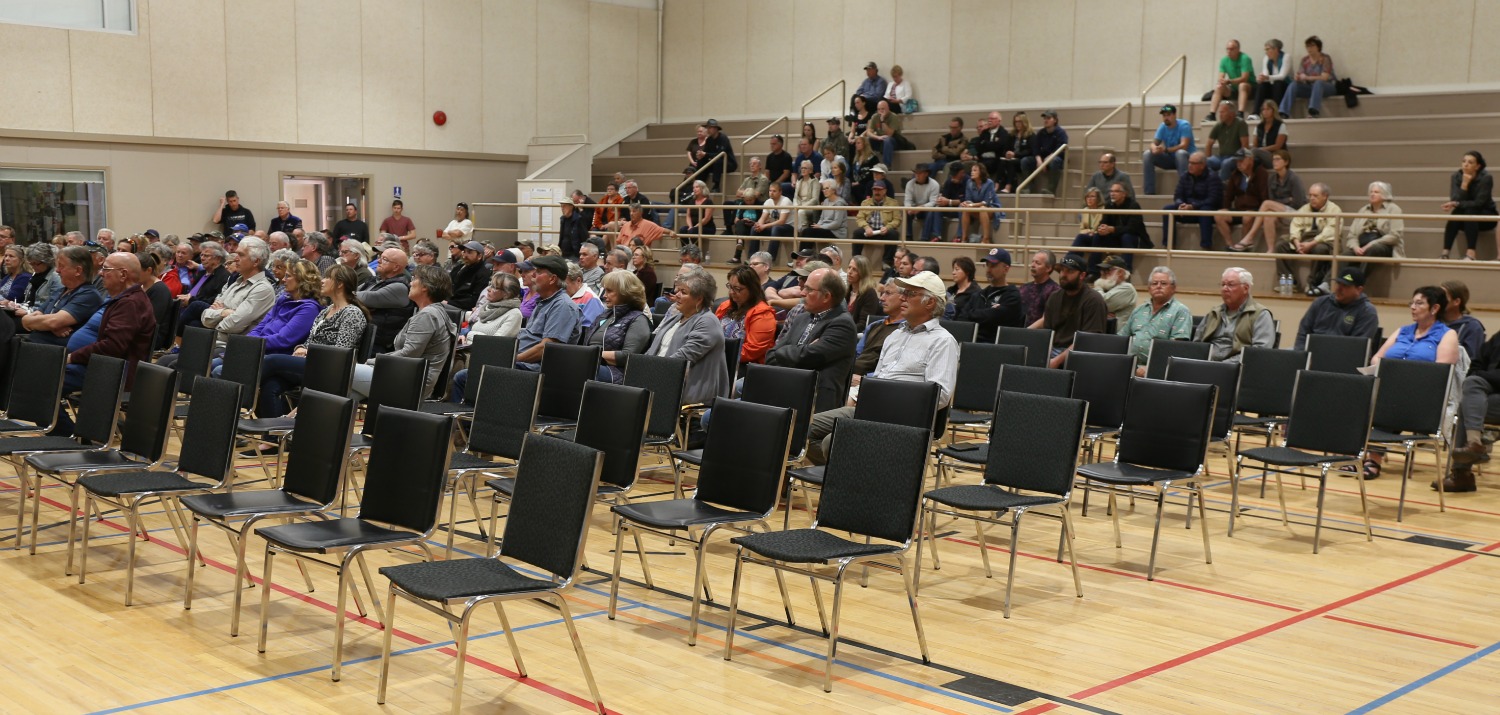
About 250 people rallied at the Sonora Centre in Osoyoos this evening intent on reminding each other why the national park proposed for the South Okanagan is a bad idea.
Parks Canada has proposed a national park reserve in the area. Although the final boundaries are not set, such a park would likely include much of the area in the triangle formed by Osoyoos, Keremeos and Oliver.
A head table of “stakeholders” kicked things off with mostly scripted remarks. They were followed by a series of about 25 locals who expressed concern about the potential impact of a park, general contempt for Parks Canada and the need for a local referendum on the issue.
Osoyoos Indian Band member Dora Stelkia read aloud a letter from her 89-year-old mother, Jane, who wrote that she enjoys taking her children and grandchildren into the countryside aboard an all-terrain vehicle and fears such access will be denied if a national park is declared.
As well, she wrote, an end to hunting will lead to an explosion of the deer population in the Okanagan Valley and more visitors will mean the highways in the area will have to be expanded.
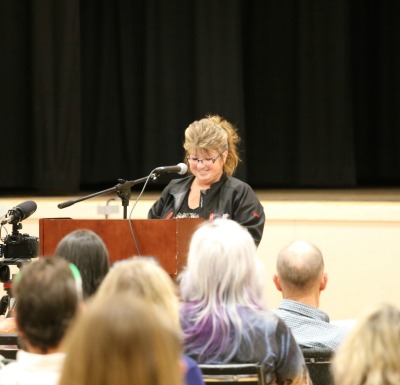
Lionel Trudel of the South Okanagan Similkameen Preservation Society (SOSPS) told the rally that public opinion has shifted on the idea of a national park and that a referendum is needed.
Oliver council recently voted in favour of supporting such a referendum. Osoyoos council voted against the idea.
Trudel said a recent a telephone survey showed that 76 per cent of residents in the area potentially affected by the park would like to see a referendum. As well, he said, 35 per cent are strongly opposed to a park and just 27 per cent strongly in favour.
The sole dissenting voice of the evening was that of local MP Richard Cannings, who was asked directly near the end of the gathering for his thoughts on a referendum.
While admitting to being “on the yes side,” Cannings said, “I didn’t come here to defend Parks Canada … I came here to listen.”
However, he said Parks Canada has never included referenda as part of the process for making a decision on national parks and that all such a vote would accomplish in this case is to “make half the people in the valley unhappy.” As well, he said, a referendum makes no sense at this point because of a lack of “a good idea of what the park will look like.”
Trudel said the position of the SOSPS is that a combination of the provincial parks department, First Nations and local people can do a better job than Parks Canada of preserving the environment and providing access to wilderness areas.
RDOC Area C Director Rick Knodel said his main fear is for the future of the agricultural industry in the valley and that a major feasibility study is needed. “I’m not against a park per se,” he said, “but we need to know what we’re getting. … We haven’t been engaged and we need to be engaged.”
Tony Acland of the Grassland Park Review Coalition outlined a litany of concerns, including: loss of recreational access for local citizens; potential loss of a major helicopter training school, which overflies the park area; destruction of the cattle ranching industry; more deer in the valley bottom because of reduced hunting; and fire danger to homes because of the replacement of grazing land with forest.
As well, he said, Parks Canada tends to put the interest of the tourism industry ahead of other economic interests, to the detriment of the local economy.
A member of the audience asked what individual can do to try to stop the park. Trudel encouraged him to write to his MP and MLA and the local media. He also suggested going to the June 17 town of Osoyoos annual general meeting and “give (Mayor Sue McKortoff) a piece of your mind.”