By ROY WOOD
The good news for the Emergency Room (ER) at the South Okanagan General Hospital (SOGH) in Oliver is that a proposed renovation and upgrade is proceeding apace.
The bad news is that many in-the-know people aren’t sure there will be an emergency department to operate in the space when it’s finished a year from now.
Interior Health (IH) South Okanagan health services administrator Carl Meadows said this week that design work for the upgrades is continuing with consultant Stantec Architecture.
“The design is expected to be completed early this winter and then we will go out to tender for the project construction,” Meadows said in a statement released by the IH communications department.
“We remain on schedule to begin construction later in the winter with project completion anticipated for the fall/winter of 2019.”
The $970,000 project was announced early this year. According to release from IH, the upgrade aims to “improve patient privacy, flow and the overall quality (of) care.”
It is funded 40 per cent from the Okanagan Similkameen Regional Hospital District (OSRHB) and the rest from IH. The improvements include: a new waiting and triage area; a separate public entrance; and relocation of admitting and administration services.
Whether there will be any medicine to practise in the upgraded facility is an issue that has area doctors and politicians worried and searching for answers or assurances.
Oliver Town Councillor Petra Veintimilla has become something of a point person for health care in this area. She is the council delegate to the regional district and was recently elected chair of OSRHB.
In an interview this week, Veintimilla said she remains hopeful about the future of the ER. But her optimism is tempered by fears that the gradual erosion of emergency services could put the department on a trajectory toward permanent closure.
She said it seems that IH is turning a blind eye to the situation in Oliver and is slowly allowing services to diminish, including occasional ER closures and reductions that allow only life- or limb-threatening cases to be treated during some shifts.
“You slowly get people used to (reduced service) … that’s a slippery slope,” she said. “Once you go down that slope, you’re probably not coming back up. That’s the scary thing.”
Veintimilla challenged IH to be transparent about the future of the ER and not simply “turn a blind eye.”
“There may not be an actual concrete plan to close the ER, but if that’s the way things are headed, then make a case for it. Put it out in the public. See what the public thinks. Don’t just let it fade away. That’s not the right way to do it,” she said.
Nobody from the Interior Health Authority would return phone calls requesting comment today.
The central problem surrounding the future of the ER is the difficulty of finding and retaining doctors to work the three shifts a day, every day of the week. The problem has been going on for several years and has resulted in occasional temporary closures of the facility.
A trio of doctors, including the former and current ER managers and a former chief of staff, appeared at a meeting of Oliver town council last week to appeal for at least moral support in their battle for the department. Their appearance was a measure of their desperation, said Veintimilla.
“Them coming to council was a really big step for them to take. Because they’ve been working diligently as a cohesive unit behind the scenes. … For them to come and say the things they said openly … shows that they are feeling a little bit desperate at this point,” she said.
The doctors are responsible for finding doctors to fill the 90 ER shifts a month. Currently they accomplish this with seven local physicians, who take time from their private practices, two part-time contract doctors from Penticton, and a number of so-called “locums,” out-of-town doctors who sign on for occasional shifts.
The former head of ER, Dr. Jacob Bellingan, told council there are 30 unfilled shifts on the schedule through the end of March. If there is no doctor available, the ER can’t operate.
The key issue is pay.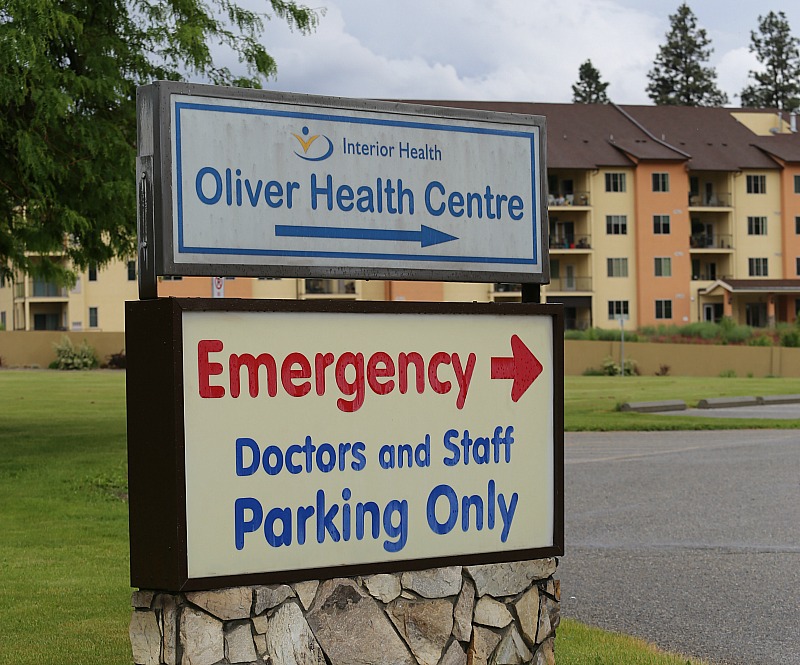
Doctors in the ER are paid on a fee-for-service basis. That is, they get paid when they see patients, not just for being on duty. There are two provincial programs – the Rural Emergency Enhancement Fund and Medical On-Call Availability Program – that help a little, but not enough to make a real difference.
The result is that doctors are paid less for work in the Oliver ER than they get for seeing patients in their own practices or than doctors doing the same work at the Penticton Regional Hospital (PRH) emergency room.
As a result, said Bellingan, while the group in Oliver is pretty good at recruiting physicians to work in the ER, it is very difficult to retain them.
Said Veintimilla: “As far as locums go, it doesn’t take long, once you’re here, to realize that there’s a better deal just 30 minutes up the road.”
There are a couple of potential solutions to the pay problem:
- A so-called Alternate Payment Plan (APP), which would see doctors paid for their time and not per patient. A proposal for an APP went to the provincial health ministry in January, but was turned down.
- Joining the emergency rooms at PRH and SOGH into one department with two branches. This would take active participation of IH and so far they haven’t indicated an interest.
Meanwhile, said Veintimilla, “Something’s gotta give. You can’t just keep doing the same thing over and over and expecting different results. … I’m very cautiously optimistic that something will work out, but this situation is not different from others where it almost needs to reach a crisis point before the right people start to pay attention.”