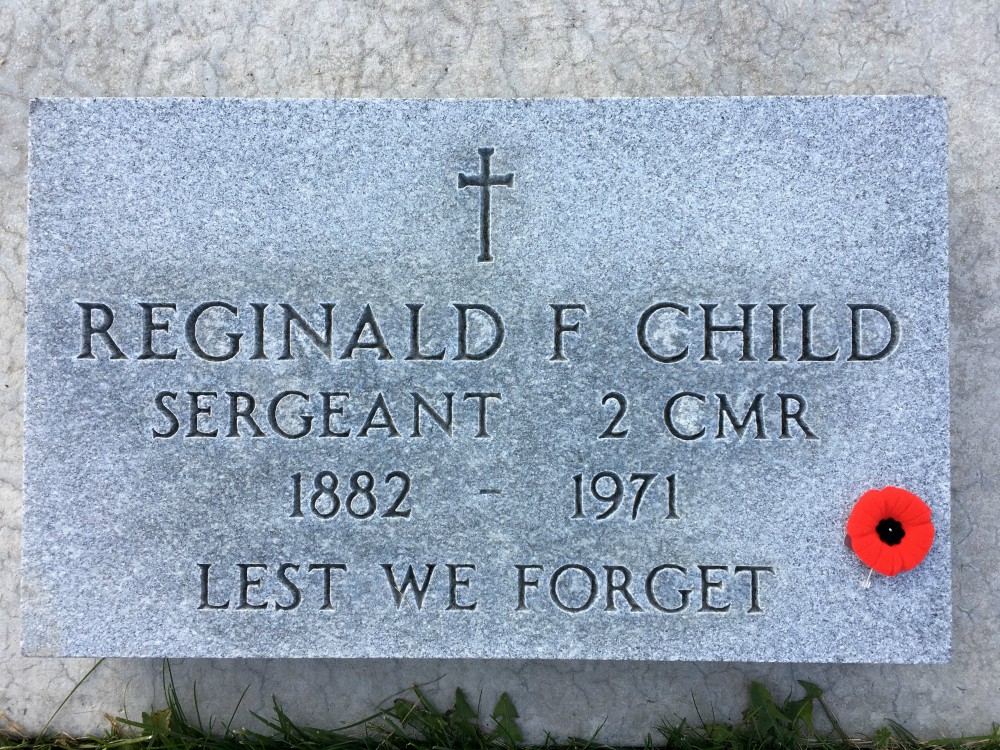
 Reginald F. (Rex) Child
Sunday Nov 11 marks a 100 years since the end of WW1. With the end of hostilities soldiers that had survived the war returned home. Some came to the south Okanagan looking for a new life.
Reginald F. (Rex) Child was one of Oliver’s first residents. Rex was born in Sooke, BC in 1882 and rose to the position of Secretary to the Minister of Lands and Mines in the BC government in Victoria. In November of 1914, at age 34 following the outbreak of WW1, he signed up with the Canadian Over-Seas Expeditionary Force. He was in the infantry and saw action at Ypres along with other engagements in Europe.
At war’s end he came to the south Okanagan (Oliver was yet to appear) with the first survey crew in 1919 to work on Premier John Oliver’s Southern Okanagan Lands Project (SOLP). The project created work for returning soldiers and brought irrigation to the south Okanagan from McIntyre Bluff to the US border. Rex took up land on the west side of Hwy 97 north of Road 8 and planted an orchard in 1921. He later bought and cleared by hand another parcel of land east of the Haynes Co-op and north of Road 9 where he resided until his death in 1971 in his 91st year.
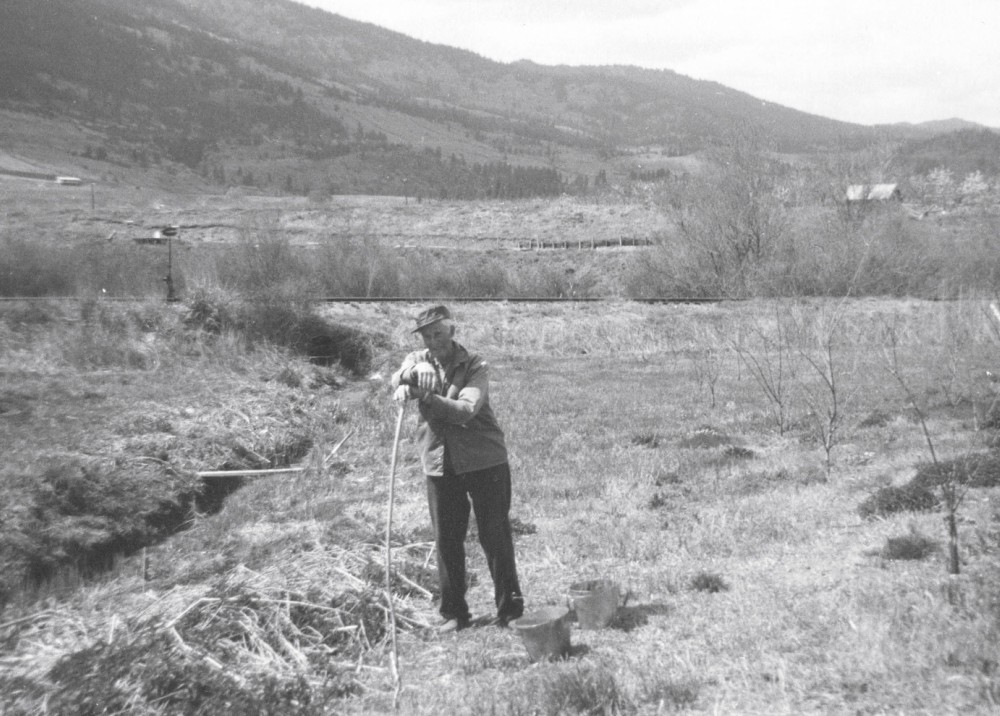
Rex remained a bachelor living on his property and venturing into Oliver several times a year to attend to matters at hand. Roy Sturgess, owner of Roy’s Grocery, would deliver groceries to Rex every few weeks throughout the year. Rex neither drove nor had a phone but he did eventually get power to his home in the 1950’s. Not all that unusual back then.
Rex resided in Oliver for 52 years and following his death in December 1971 several tributes were carried in the Oliver Chronicle including…
“Rex was a versatile and unassuming man of marked integrity with a keen and penetrating mind… He was kind and generous to a fault always ready to help a good cause or anyone in need. Incapable of saying an unkind word or doing an unkind deed. Always looking on the bright side of things no matter what conditions and circumstances had to be contended with.
He lived to an age well beyond the allotted span taking an interest in everything up to the very end.”
His grave remained unmarked for the next 34 years until the Last Post Fund provided a marker that was placed by the Town of Oliver in 2005. Lest we forget.