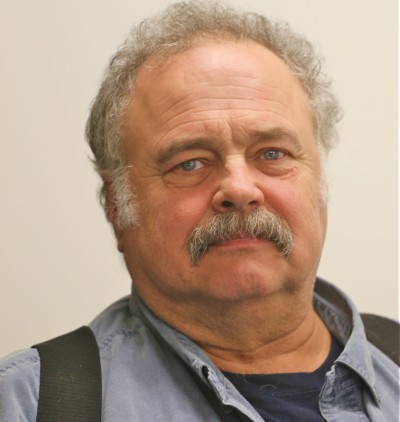
 ODN asked those running in rural area C (RDOS) to answer questions posed by Publisher
From Rick Knodel
ON RELATIONSHIPS – Area “C” and the Town of Oliver
I believe that over the years the relationship between the Town of Oliver and Area “C” has been like a good marriage where there is the occasional quarrel but the relationship is solid and healthy. The Area and the Town participate jointly and successfully in a number of ventures like the Frank Venables Auditorium, the Parks and Recreation facilities, and the siphon irrigation system which is owned and operated by the town and supplies the irrigation water to a large portion of the farms in Area “C”.
A recent decision by the Town may have a detrimental effect on that relationship. Over the last three decades the water councillors have been the unofficial eyes of Area “C” at the town council meetings and have been able to efficiently voice a non-voting opinion on matters relevant to the surrounding area.
I believe this has created a very smooth and open operational system. I believe that with co-operation we will still be able to work together and advance the agricultural business opportunities for the benefit of both the Town of Oliver and Area “C”. Perhaps from an Area “C” point of view it may be time for directors to request a seat on the town council just as the mayors sit on the regional board and can only vote on financial issues involving the towns but still have input into the functions.
In the future it is my hope that B.C. agricultural value-added programs promoted by Agriculture Minister Lana Popham will be developed here and will add economic stability and year round employment to both Area “C” and the Town of Oliver.
There is also a need to develop a co-operative approach to the need for foreign worker accommodations and I believe the Town of Oliver could reap considerable benefits from a partnership in this and also expand the access to foreign workers to smaller farms that cannot expand without experienced farm workers.
ON FLOOD PREVENTION
The MOTI (Highways) has started a program of culvert upgrades that better reflect the recent runoff rates. My understanding is that these projects will be completed this fall.
When it comes to dealing with the creek beds both on private lands and on crown forestry lands that is the jurisdiction of FLNRO (Forest Land and Resources) and they have gone quiet so I cannot comment on what they are doing, only offer my opinion as to what needs to be done.
In the future the maintenance of creeks on private property should be changed from the permitting system, which has proven to be time consuming cumbersome and expensive, to regulation that requires no permits and allows the property owners to take precautionary actions as needed and without delay .
On the valley floor the river needs to be restored to its original bed elevation and a maintenance schedule established.
There is a pressing need to re-establish the original bed elevation of Parkrill creek for approximately 400 meters south of Gold Tau Road. The bed level of Parkrill creek was inadvertently elevated by four to five feet when FLNRO or Parks B.C. undertook an invasive species removal project. This was not noticed until two years ago when we experienced the first of the high runoff events that have so drastically affected the Willowbrook and Sportsman’s Bowl areas. This is mired in red tape and interdepartmental bickering. Parkrill creek must also be reestablished in its original bed at the Sportsman’s Bowl area. These issues must be addressed before the spring runoff begins.
The provincial government is currently attempting to download the maintenance of creeks running through forestry crown lands onto the regional districts. This would require the establishment of service areas and result in exorbitant increases in taxation to small areas of population. In my opinion this is unacceptable. These lands have been the responsibility of B.C. Forestry and the province receives the revenues from these lands in the form of timber rights, mining rights, grazing licenses, and hunting and fishing licenses, etc. Flood mitigation should be treated no different than forest fire fighting or prevention and be funded by the province as a whole as surface water is considered a Provincial asset. Keep in mind that once these taxes are in place the climate could very well go back to our more “normal” dry conditions making this tax a cash windfall and that would disappear into the bottomless pit of general revenue.
The pressure must be kept on the Provincial Government and FLNRO by both the residents and the RDOS to see meaningful change here.
ON TRAFFIC CONGESTION/SAFETY
Traffic through the valley will only keep getting more congested. As I see it now summer traffic through the area and the town is at a point that has become a deterrent to anyone wanting to stop at any of the fruit stands, wineries or in town. Access and egress from highway 97 is clumsy, time consuming and sometimes risky.
There is limited space available to expand the highway to three or four lane affectively or economically so that resurrects the discussion of a by-pass.
Over the years many by-pass routes have been discussed – Black Sage Road/Sawmill Road but the one that tends to emerge as the most economical and least disruptive to Native Lands and farm lands is Road 9 through Willowbrook White Lake road. In the future the town will have to be bypassed to relieve the pressure. As a side note this would maintain the small town cultural feel and accessibility of our community while improving commercial and economic access.
Gaining the authority over the river channel hike and bike trail so that it would be properly maintained would further entice pleasure cyclers and pedestrians away from the traffic corridors.
ON PROPOSED NATIONAL PARK
Should this ever hit the consultation stage it would be a dereliction of duty to not be at the table but it should also be kept in mind that much of what the area would need to see protected from the formation of the park would require specific alterations to the Canada Parks Act in order for those protections to be guaranteed. We would most definitely need to retain expert legal representation (of our choosing) in this as the issues at stake represent the life blood and security of this area and we would only have one opportunity at getting it right.
We must also note that the Federal Government intends and has stated that all infrastructure costs will be downloaded onto the local taxpayers. The ten million dollars that has been spoken of is only for developments inside the proposed park boundaries, anything out side we are to be on the hook for and these costs are likely to be tremendous.
According to Kevin McNamee Director of protected areas Parks Canada this is still only a proposed park as many legislative hurdles must still be met.
We will have to be very diligent in this matter.