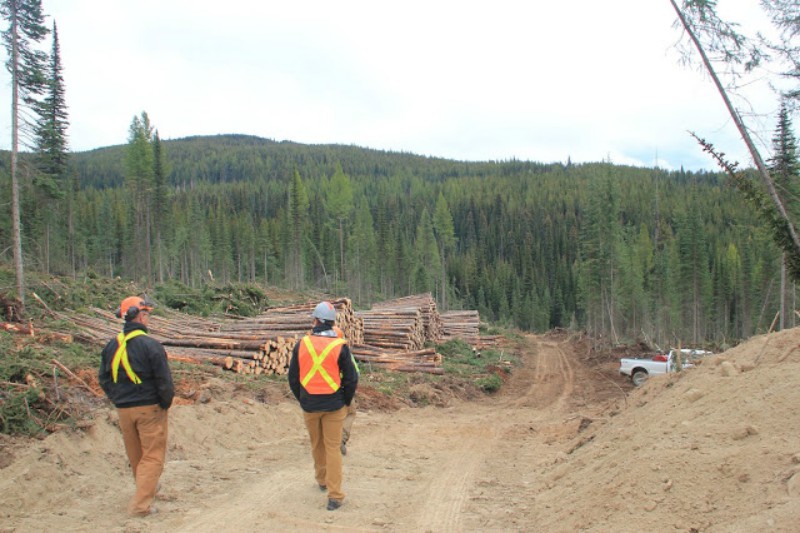
Osoyoos Indian Band, the Mountain Resorts Branch, Forest Enhancement Society of BC (FESBC), Mt. Baldy Resort and wildfire management specialists at Davies Wildfire Management have started work on a landscape level fire management project. The project is a fuel break entailing a 350 to 400-metre-wide horseshoe shaped band surrounding Baldy Mountain Resort, the community, and the resort’s future sub-divisions. The main objective of the project is to decrease the opportunity for wildfire behaviour in the fuel break by increasing spacing between tree crowns and decreasing surface fuel loading on the forest floor so if/when a fire enters the fuel break, it is lower in intensity allowing firefighters to have a better chance at battling it successfully. The project is not a clear cutting of the stands, but rather a thinning of trees in a patch format i.e. leaving islands of trees.
It was in the 1930s when a fire last moved through the area. The subsequent stand that has grown back is dense and is now prone to a large scale, catastrophic wildfire. A landscape level fuel break would serve to reduce the severity of a wildfire. FESBC grant was applied for a few years prior, which was accepted and has led to the decision to move ahead to develop the fire break.
The FESBC funded project will include these preventative measures:
•Increasing spacing of tree crowns
•Clearing of fuels along the forest floor
•6-8 weeks of removing trees followed by reducing fuels on the forest floor by hand
“FESBC is delighted to participate with Baldy Mountain Resort in reducing wildfire risk to their citizens, homes, and infrastructure such as emergency escape routes, water availability, and communication,” says FESBC Operations Manager Dave Conly. “FESBC applauds Mount Baldy for recognizing the risk of wildfire and taking action to reduce that risk.”
Ultimately, the fuel break will help protect the community of 100+ cabins as well as Baldy Mountain Resort for years to come, which is the overall goal.
Photos by Sandra Smith
Words of Sandra Smith
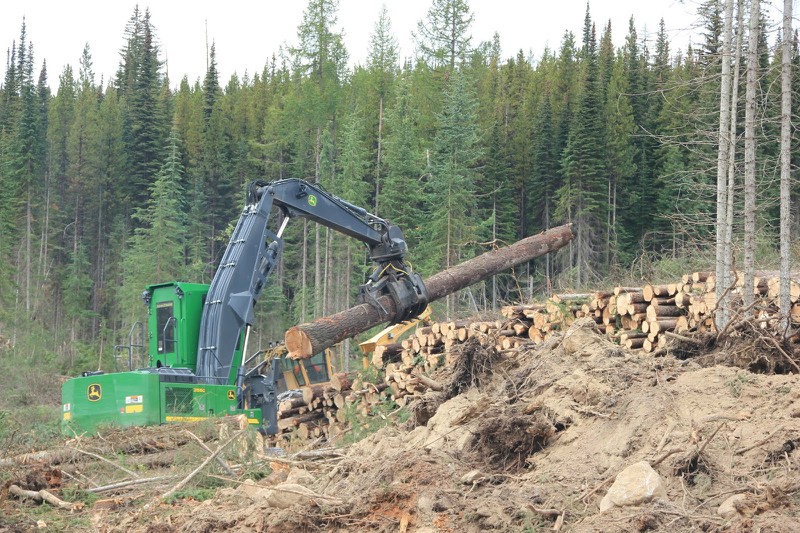
There has been good collaboration from all parties involved. I witnessed conversations with mill representatives and machine operators. This is an opportunity for the mills to get wood to augment their supply, and of course work for the logging contractors. (about 20 pieces of equipment on site now.) One operator estimated that his productivity is about 30% less than it would be on a conventional logging project.
It took a little time to adjust and adapt the approach of the harvest, but all parties including the loggers have had input. In the first test area, they left extra trees standing, expecting that the skidders may take a few out on their way by. That hasn’t happened, so a few more trees will be taken out of the original test block.
Roads and landings within the prescription have been added to keep the logging trucks off the village roads. The main road in from the transfer station follows an existing snow shoe trail – some of the existing corners were straightened a bit for trucking purposes, but the trail will have rehab after the logging. Yet to be determined is whether all roads will be decommissioned, or if some may be left for easier access in the event of fire.
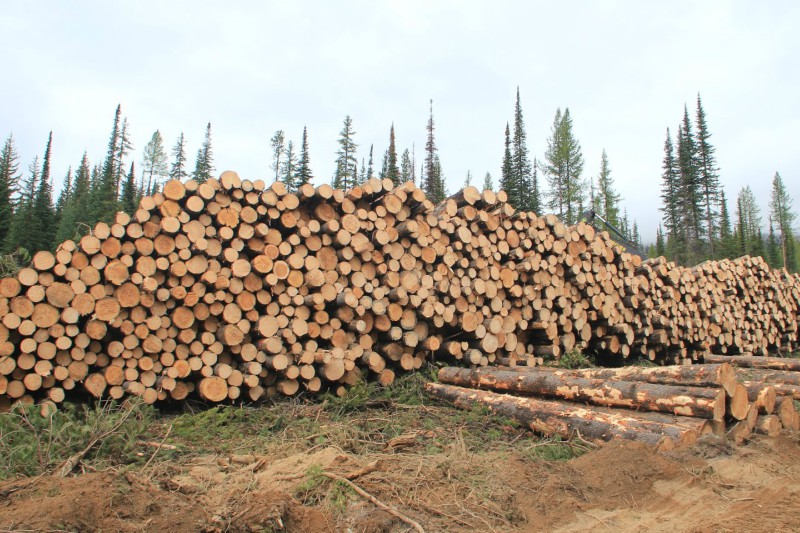
All the larch , deciduous – and trees greater than 50cm dbh are being left standing. The main focus of removal is the pine, as it is at or near the end of it’s life span. There is good pine decked, but also some “denim” pine – from pine beetles. There are clumps being left of smaller trees where there are no trees of the desired species and size to be left.
Tree tops will go to Midway for chipping, which reduces the amount of slash.