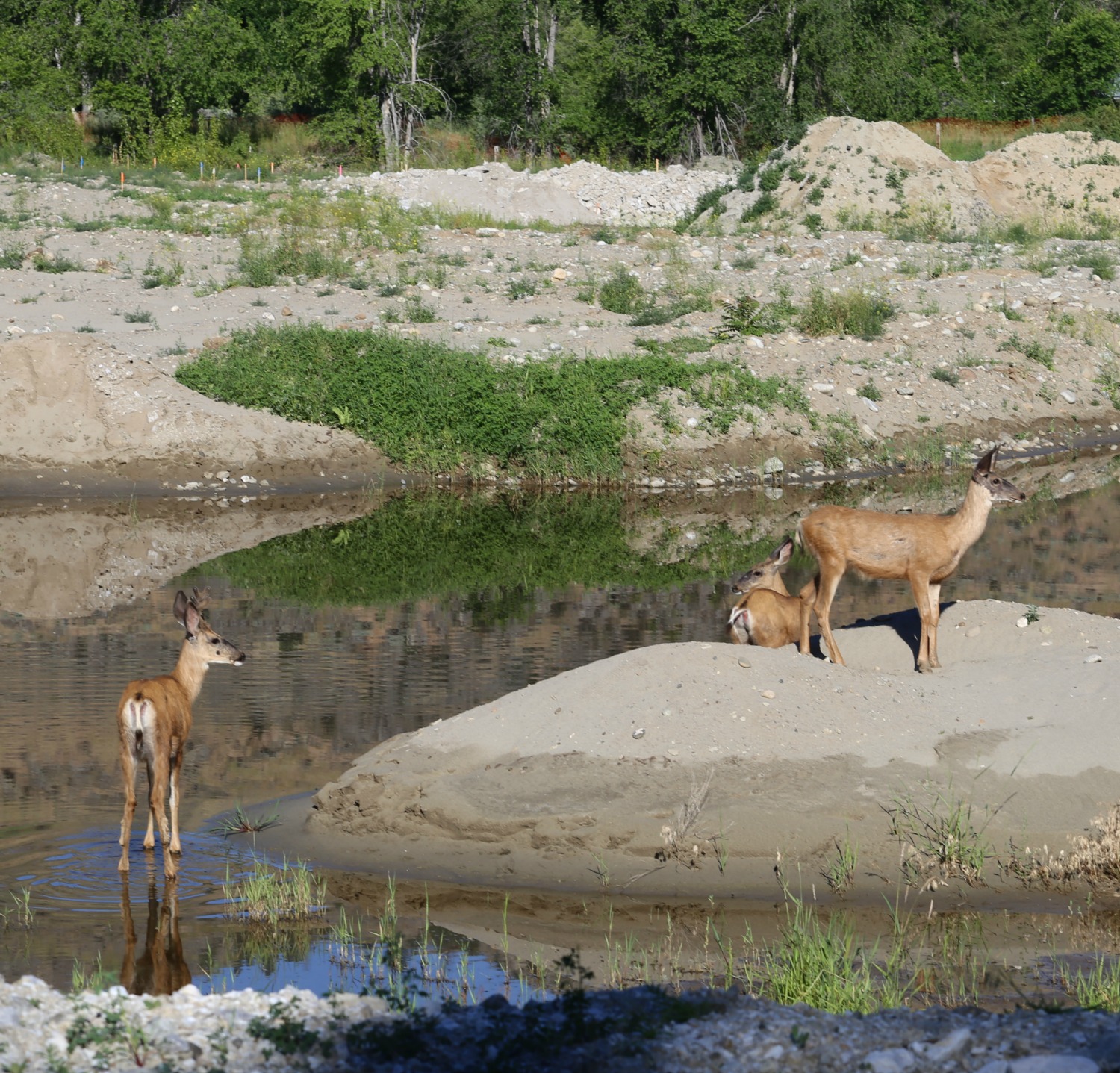
 It may seem like fires are increasing, but for mule deer populations it’s not enough to create the habitat they need. According to the BC Wildlife Federation, the reason why mule deer are moving into urban environments is the lack of wildfire in the past several decades, said director Jesse Zeman, of the fish and wildlife restoration program with the BC Wildlife Federation.
Mule deer are used to adapting to the natural wildfire patterns that occur every 10 to 40 years, said Zeman.
With the regrowth in Okanagan Mountain Park since the 2003 fire, the deer are in search of a new food source and have moved into tow “Generally speaking habitat quality is going down, especially in Kelowna,” he said.
Mule deer like open habitat and as large brushes and trees fill in what was once open space, “deer are migrating to cities as a survival strategy,” said Zeman.
Proposed strategies for relocating deer like in the East Kootenays, or providing them with birth control aren’t effective to control the population either, he said. Once mule deer have gone through a generation, they become dependent on the urban environment. Survival rates in the wild are incredibly low for these deer.
“It makes people feel good but doesn’t do anything meaningful for the conflict. It doesn’t deal with the real issue, which is why are deer ending up in town?”
A new study will examine the relationship mule deer have with wildfire in the Southern Interior and around the Okanagan, said Adam Ford, a biology professor at UBCO and research chair for the Wildlife Restoration Ecology Lab.
The study, titled the Southern Interior BC Mule Deer Project, aims to determine why mule deer may be declining in the wild, but increasing in cities.
Ford believes there is a correlation between the lack of natural wildfires and deer migrating to urban environments.
Source: BC Wildlife Federation
See poll on deer in towns and cities (at right)