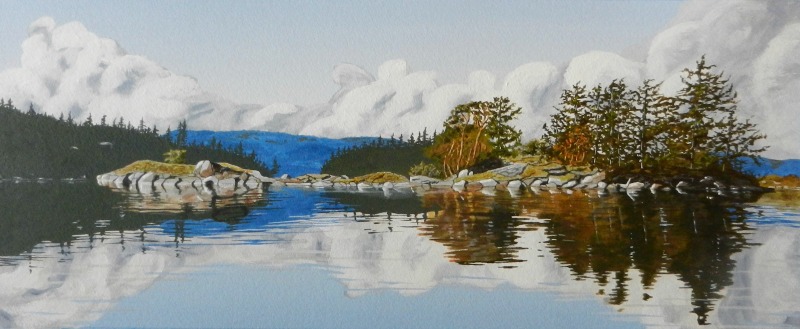
 Skardon Island is really just a small rock island with a few trees at the entrance to Pender Harbour. If you check on Government maps you’ll see that it’s listed as“Skardon Island Indian Reserve”.
So many times in conversations with people on the matter of reconciliation with First Nations people, I hear the words “Why don’t they just get over it?” I’m always frustrated in hearing that in that none of us truly “get over” what’s happened to us inthe past. We all work at it as best we can but it always takes time. I have long been
associated with First Nations people. Luckily my work many years ago allowed that to happen. I’m now personally and intimately aware of the issues of Residential Schools, the Reserve system and all the other bureaucratic and systemic abuses of the First Nations people over the years.
But, even with all that knowledge I must admit to having been emotionally shocked at what I saw in Pender Harbour this past year. On a delightful day of paddling with school kids in traditional canoes we came up to this rocky island – Skardon Island. That’s when I learned that in the late 1800’s this became an “Indian Reserve”. With no water, no firewood and certainly no resources as a food source, up to 30 families were relegated to live there. This would be their “home” now, while the European population would take over their long traditional land for their own purposes. With over 300 meters to shore, how uncomfortable this must have been for all who lived there.
I’ve seen this island a few times since, as I’ve paddled in the area. I’m always moved as I paddle around its barren, rocky shores. I found it hard to imagine a single family living there on a permanent basis. I couldn’t envision 30 families forced to live there. Then I saw the photograph to prove it. I’ve attached that photograph to
this story. I hope my painting of this serene island at first struck you as beautiful. I hope now that you know of its history, you can understand why First Nations people are taking a bit of time to “GET OVER IT”.
Ed Hill
Thanks to Ed and his friend Clarence for sending this on. Unfortunately the only picture of the reserve circa 1920 is a bit to small to be seen here.