As a region, all detachments were tasked with completing proactive street checks, targeting areas identified as high crime. This is not a seasonal initiative, but action expected from all detachments throughout the year. This is primarily checking persons who are on foot, particularly in the evenings when there is less general foot traffic. This is most successful in communities that have a dense downtown or residential core. In less dense communities, members are more likely to engage in patrols by vehicle or making vehicle stops.
All regional detachments are committed to continuing this increased trend of street checks to ensure our members remain highly visible to the public and potential offenders. This proactive measure is also an opportunity for our members to have positive engagement with the public.
CRIME REDUCTION
Prolific offenders are the small percentage of individuals who are responsible for a disproportionate amount of crime. The Prolific Offender Management (POM) program is based on an inter-agency collaborative effort involving Community Corrections, R.C.M.P., Crown Counsel, Ministry of Housing and Social Development, Correctional Services of Canada and the Ministry for Children and Family Development (Youth Services, Child Protection and Youth Probation). Protection of the community and reduction of recidivism are the guiding principles of this program, achieved by collaborative case management, consistent sharing of information amongst the program partners and engaging the offenders with community services to address their criminal behaviour. Consistent monitoring of these persons while bound by conditions is key to this program. It is well known that prolific or chronic offenders have no boundaries, and they are often committing crime in multiple communities. These situations lend themselves to collaborative approaches amongst the South Okanagan Detachments and Units, which allows not only the pooling of resources when required but also the pooling of intelligence to assist in successful enforcement. Intelligence is collected and interpreted through the Crime Analyst attached to the Regional Detachment. She is instrumental in ensuring resources and proactive activities are being conducted in community “hot spots”.
Here are examples highlighting some of the proactive and collaborative work occurring in the region: In June 2016, the Regional GIS Unit and the Princeton RCMP engaged in surveillance on a well known drug house. This led to the execution of a search warrant and a large amount of hard drugs and money being recovered. Charges are pending against two persons in this matter.
In August 2016, the Princeton RCMP, South Okanagan Traffic Services, Keremoes RCMP and Penticton RCMP/GIS all assisted with safely stopping a stolen vehicle. The occupants were arrested and taken into custody without incident. The occupants are suspected in several theft files throughout the South Okanagan as well as a robbery.
In October of 2016, the Princeton RCMP with assistance from the Regional GIS section executed a warrant on a property on the Princeton Summerland Rd. They recovered over $30,000 in stolen property, and also found evidence of mail theft. This incident also had ties to a Penticton file involving firearms, and investigation is continuing in to this matter.
Recognizing mail theft as an issue in the South Okanagan, in October 2016 the Oliver Detachment executed a search warrant for stolen mail in problem residence in the community. A Postal Investigator from Canada Post assisted in providing evidence in this matter which led to 5 charges against one person, including being in possession of stolen mail, mischief and theft.
In November 2016, the Penticton Target Enforcement team in collaboration with the Oliver Detachment were able to recover several high value stolen items from a rural property outside of Oliver. This included a stolen vehicle and trailer from Penticton and a stolen trailer with 3 ATV’s from Princeton.
REGIONAL COMMUNITY POLICING- PROGRAMS AND SUPPORT
In this reporting period the program continued to seek opportunities for improvement of awareness and quality of services. The program offered training sessions (on Community Accountability Panels, Best Practices as a Facilitator, and the Process of Pre-Conference Interviews) for current volunteers as well as new volunteer training and orientation. The program explored opportunities for enhanced collaboration within the community, providing a Restorative Justice session in September for School District 67 to facilitate two students in their return to school after an incident resulting in criminal charges in the Spring of 2016. The program coordinator completed the Grant Applications for the Community Accountability Program Grants for the component municipal programs in Penticton, Oliver, Osoyoos, Keremeos and Princeton, and continued to make plans for opportunities for awareness events throughout Restorative Justice Week 2016, including collaborating with People’s Law School on a community presentation. Further, the coordinator made efforts to expand awareness of volunteer opportunities in Restorative Justice in all communities of the program through membership with the South Okanagan Similkameen Volunteer Centre.
In this reporting period Community Policing completed five presentations on Frauds & Scams and Crime Prevention in the community, assisting the Princeton RCMP with the ‘Roll-Over Demonstration’ at Princeton Emergency Services Demo Day, collaborating with the Penticton Public Library for a `Learning at Lunch` event (2016/09/16), the Okanagan Regional Library in Keremeos (2016/09/13), and providing presentations responsive to the concerns of residents of Skaha Sunrise (2016/07/19) and Caravilla Estates (2016/09/27). At the end of the quarter Community Policing was working on further requests for presentations with the Penticton Public Library, Okanagan Falls Seniors Centre, and providing advice regarding an independent Citizens on Patrol program in Okanagan Falls.
In this reporting period the coordinator continued to support Child and Youth Mental Health collaborations (CYMHSU) including the Local Action Team for Penticton (Penticton LAT), the Local Action Team for Osoyoos, Oliver & Okanagan Falls (OOO LAT), the Early Intervention Committee, the Critical Response Committee, and the CYMH Co-Chair Committee, as the programs head into their final six months of funding (concluding March 2017). Partnerships with MCFD, Aboriginal Services, and the ICM team, of Martin Street Clinic, were continued to ensure effective community support specific to Aboriginal groups and at-risk individuals with Mental Health Issues (individuals of high concerns to the ICM team generating high calls for service). Finally, the coordinator met with the Justice Education Society and attended the Courthouse to explore the potential for collaboration on opportunities for youth participating in the Restorative Justice program. The ICAT (Integrated Case Assessment Team) monitors high risk domestic violence situations through community service collaboration. They currently have approximately case 12 files they are monitoring in the region. The program has continued to be successful in decreasing recidivism in offenders in these cases.
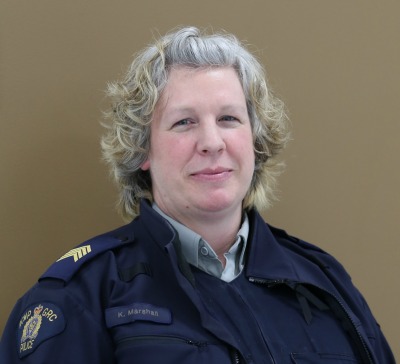
Staff Sergeant K.H.. Marshall
Acting Officer in Charge, Penticton –
South Okanagan – Similkameen R.C.M.P. Detachment