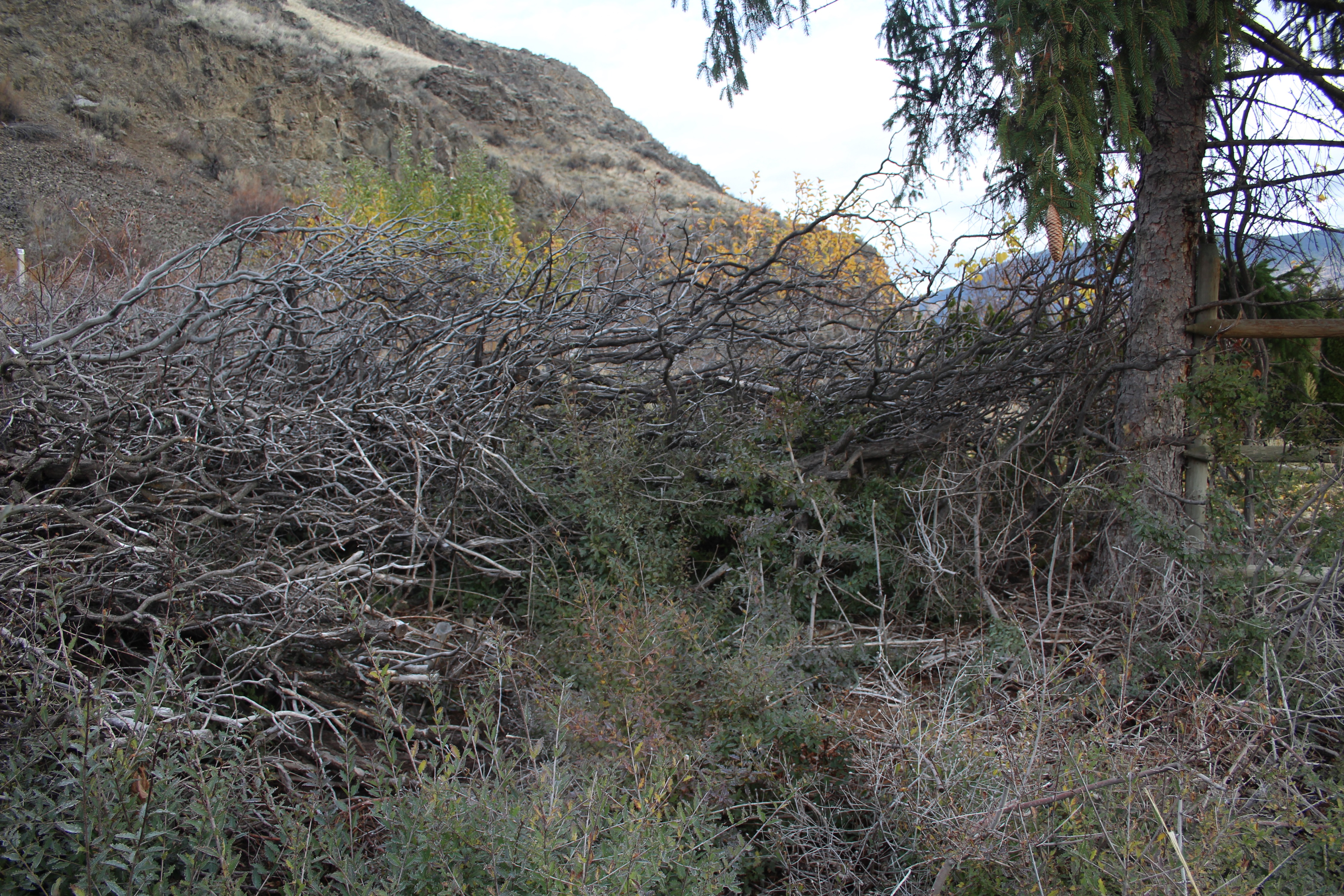
 Dead branches. Dry grass. Bark mulch.
All can be hazards – deadly hazards given our dry climate here in the South Okanagan.
That in mind, there is a push for Oliver and area residents to become more aware of problem areas around homes – and clean up what could cause a major fire in the future.
The goal is for the Town of Oliver to become a FireSmart Community.
“The typical ignition fuel hazards we see are dead tree needles on roofs, in gutters and on the ground,” stressed John Davies, a Wildfire Management Specialist. “As well, bark mulch, juniper bushes, cedar hedging and dry grass material within 10-metres of homes is also an ignition hazard.”
Well-researched documentation shows that upwards of 90 per cent of homes that have a non-combustible roof and 10-m. of clearing of non-combustible material around homes survive wildfires.
“That is well-researched and cited through the wildfire science community. Additionally, more than 50 per cent of homes that burn do so as a result of ember shower associated with wildfire and not a wall of flame moving into the community,” added Davies. “So, if we can keep roofs from igniting and spot fires starting within 10-m. of homes during an ember shower, then we can greatly increase the chance of homes surviving a wildfire.”
Former Town of Oliver Mayor Pat Hampson is the lead for the Morningstar and Eveningstar areas of Oliver. He has assembled a four-person group with a goal of creating awareness and encouraging residents on these streets to reduce the amount of combustible debris under trees and in their backyards as part of an initiative to have Oliver declared a FireSmart community. FireSmart came into being 2003 under the auspices of the BC Forest Service and the Office of the Fire Commissioner.
“The FireSmart has an extensive list of items as a means to create a FireSmart Community. This covers building materials, road and driveway dimensions, utilities, landscaping,” summarized Davies. “What most neighbourhoods need to focus on is promoting non combustible and clean roofs and reducing ignition sources with 10-m. of their home, which are typically associated with plants and landscaping material.”
Despite the fact it’s Fall, and the South Okanagan receives more rain at this time during the much-drier summer months, Hampson is adamant residents should always be cognizant of the many fire hazards around them.
“There is a concern, especially in this area because we get very little rain. I think the maximum that we expect is about 350 millimeters, which is four days of rain in Vancouver,” explained Hampson, who showed me the problem areas around his home on Morningstar, as well as the debris piled up on crown-land behind the many properties along his street. “We’re in a very dry area. All it requires is someone to light up a cigarette or drop a match for a fire to start. It may not spread as quickly but it’s still possible for the fire to extend via the debris, and conifers will burn almost any time of the year.”
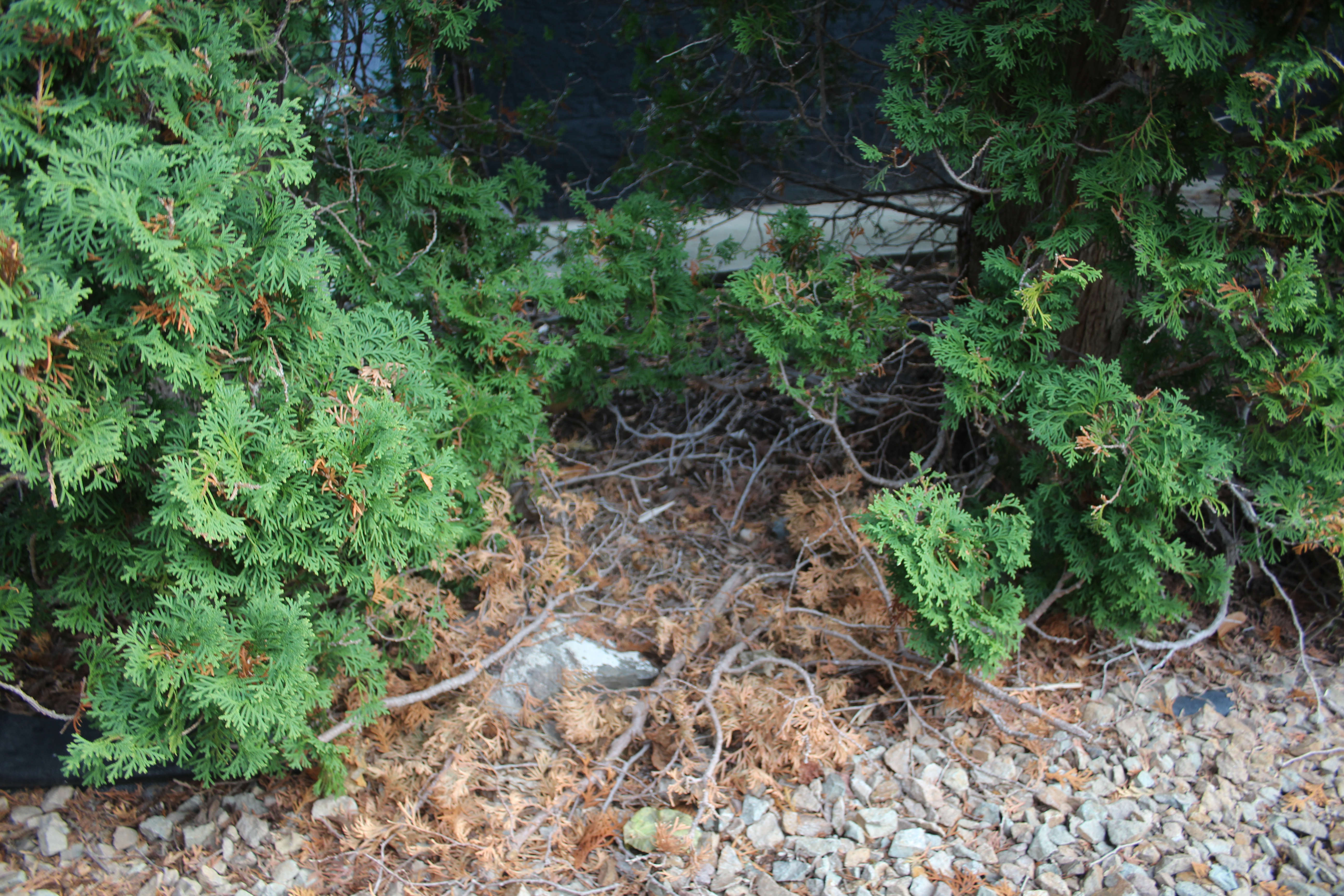
A FireSmart Community event is being planned for late November, during which time residents will be encouraged to clean up their yards,
“This is the time to do the work before summer arrives.” added Hampson.
-Dale Cory