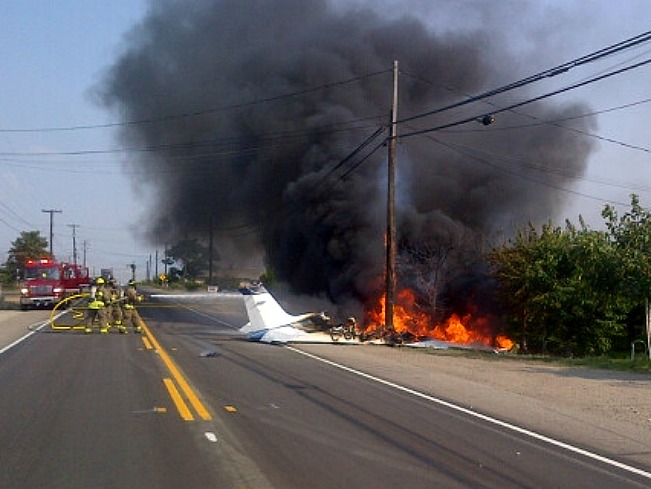
 Engine power loss due to vapour lock led to July 2015 forced landing on Highway 97 north of Osoyoos
According to a Transportation Safety Board of Canada report – the engine of a Beechcraft A36 Bonanza that force-landed on Highway 97 northeast of Osoyoos in July 2015 lost power, likely because of fuel starvation due to vapour lock.
On 7 July 2015, at approximately 1645 Pacific Daylight Time, the privately operated Beechcraft A36 Bonanza (C-GPDK) departed Oliver Municipal Airport, British Columbia, with only the pilot on board for a flight to the Boundary Bay Airport. Approximately six minutes after takeoff, the aircraft suffered an engine power loss, and the pilot carried out a forced landing on Highway 97. The aircraft struck a truck and a power pole, and came to rest on the edge of the road. A post-impact fire consumed most of the aircraft. The pilot was able to get out of the aircraft, but sustained serious burns.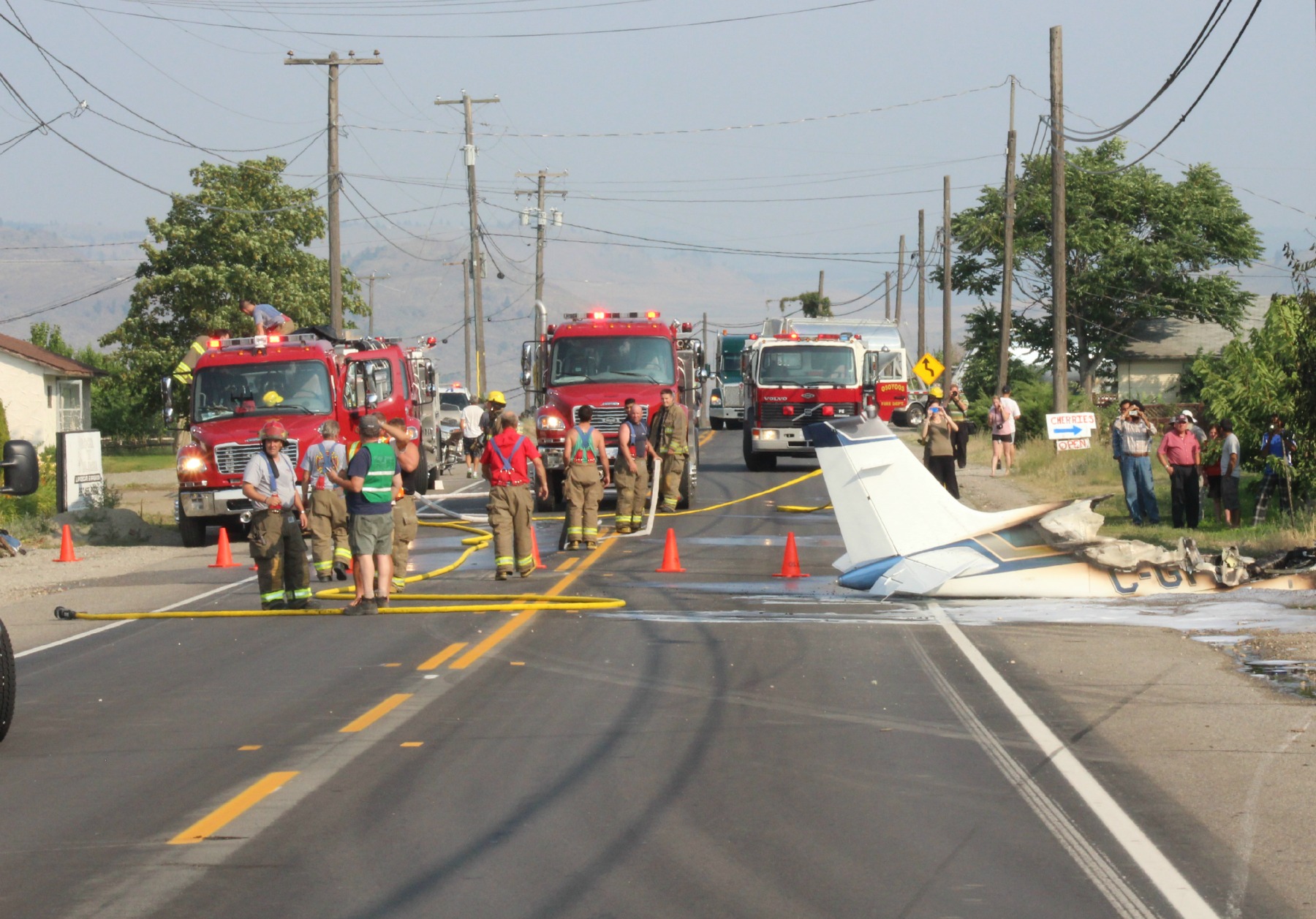
The investigation determined that the aircraft’s engine was likely starved of fuel due to vapour lock, and lost power as a result. Vapour lock occurs when fuel, normally in liquid form, changes to vapour while still in the fuel delivery system. This change causes a reduction in pressure to the fuel pump, disrupts fuel flow, and can result in temporary or complete loss of engine power. The pilot had experienced fuel-flow fluctuations and power losses on previous flights with C-GPDK, but was able on those occasions to successfully regain normal power and engine operation. Those previous successes in regaining full engine power may have delayed the pilot’s selection of a forced landing area. The nearest airport was then not an option, and Highway 97 was chosen as the next best emergency landing area.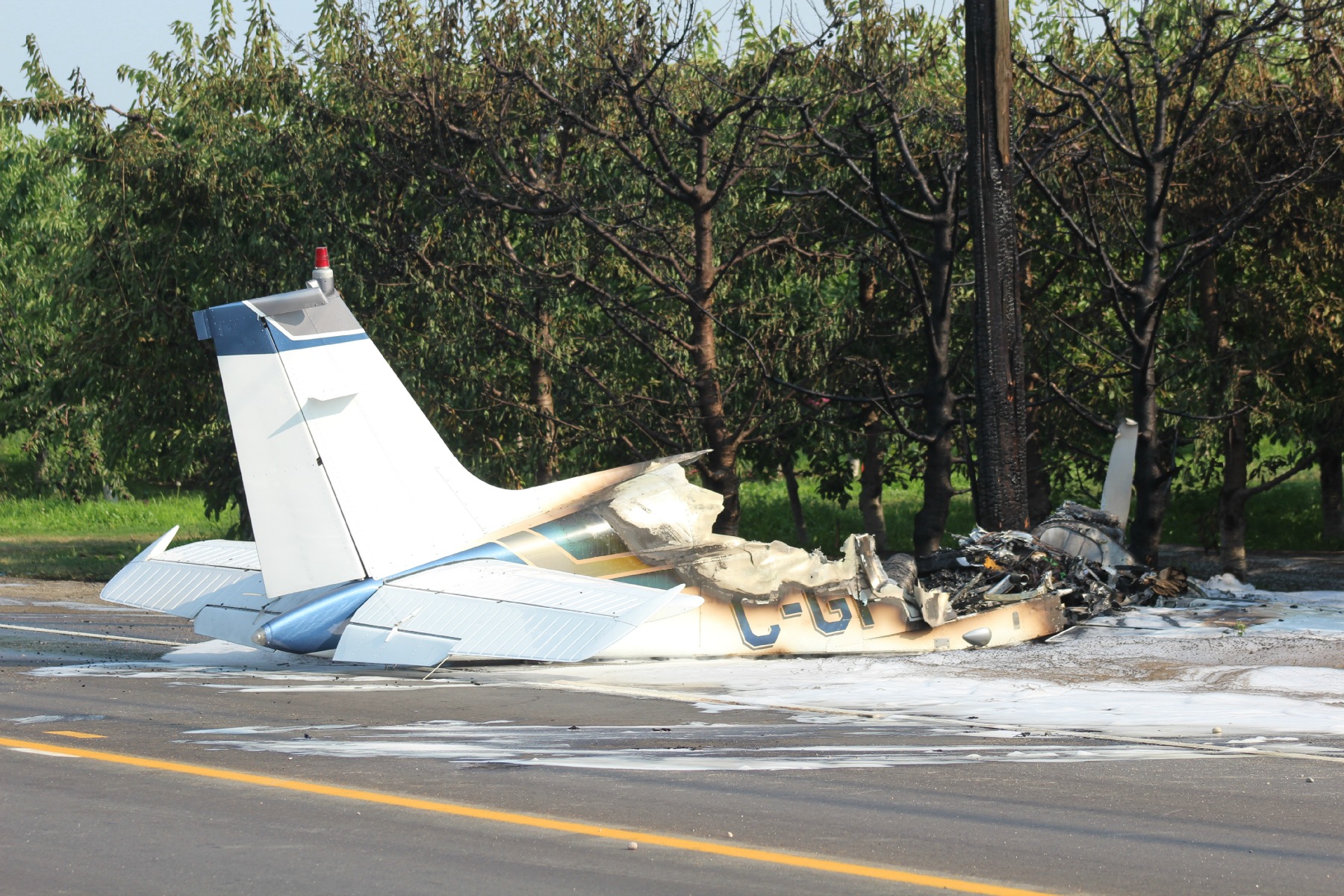
Post-impact fires have been documented as a risk to aviation safety in previous TSB investigation reports. In 2006, the TSB issued a recommendation to reduce the number of post-impact fires in impact-survivable accidents. C-GPDK did not have, and was not required to have, any of the technologies, materials, or components identified in Recommendation A06-10. If aircraft are not fitted with crashworthy fuel-system components that retain fuel or with systems that eliminate ignition sources, the risk of injury or death due to post-impact fire is increased.