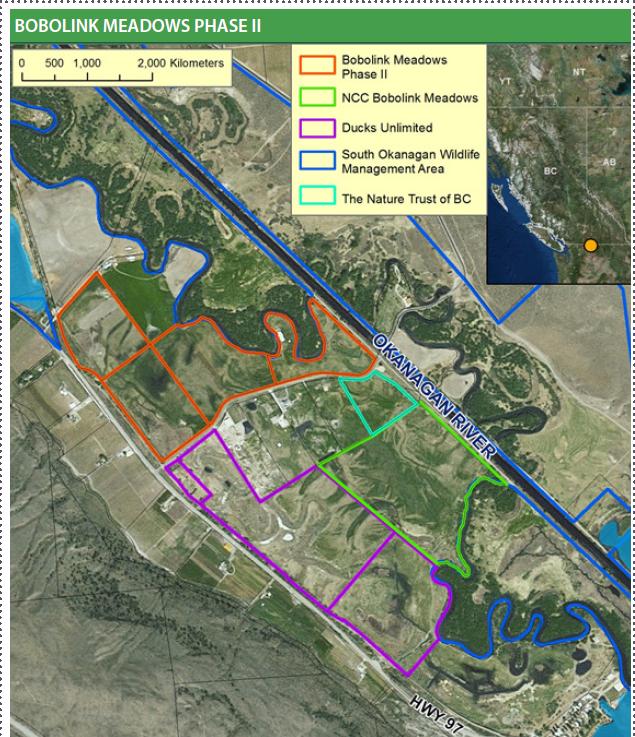
 The Nature Conservancy of Canada (NCC) has launched a new conservation project midway between Osoyoos and Oliver. Called Bobolink Meadows, the project takes its name from the bobolink, a small songbird that undertakes the longest migration of any North American songbird, travelling some 20,000 kms to and from southern South America each year. The group is fundraising to acquire an additional 90 acres (36 hectares) of rare wetland/meadow habitat in the Osoyoos Oxbows area. NCC has confirmed funding for 80% of the $1.9 million project and is working to raise the remaining 20% by December 2016. This conservation acquisition will enhance an existing complex of conserved lands owned by NCC, the BC Government and other conservation groups.
Rare wetland/meadow habitat is disappearing in the Okanagan
At the north end of Osoyoos Lake sits a stunning suite of properties that make up part of the Osoyoos Oxbows Important Bird Area. Located midway between Osoyoos and Oliver, these four properties contain some of the last remaining marshes in an area that was once a significant chain of wetlands.
Much of this rich wetland system has been lost to agricultural and urban development. Still, the Osoyoos Oxbows area continues to support diverse wildlife such as long-billed curlew, northern harrier, tiger salamander and numerous species of bats. Bobolink Meadows Phase II will protect a prime example of rare valley-bottom wetland/meadow ecosystem. This acquisition will build on an existing conservation complex that includes lands owned by the Nature Conservancy of Canada and its conservation partners.
What’s in a name? This project takes its name from the bobolink, a small songbird that undertakes the longest migration of any North American songbird, travelling some 20,000 kms to and from southern South America each year.
Bobolink Meadows II at a glance
Location: South Okanagan
Nearest towns: Osoyoos & Oliver
Size: 90 acres (36 hectares)
Number of parcels: 4
Project Budget: $1.9 million
Habitats: valley-bottom wetland and meadow ecosystem
Species at risk: bobolink, long-billed curlew, barn owl, short-eared owl
Other notable wildlife: tiger salamander, great basin spadefoot, turtles, waterfowl, migratory songbirds
Threats: agricultural and urban development
Conservation project will reverse habitat loss in internationally important bird area