 Wildlife Groups Host Town Hall to Save Wild Sheep
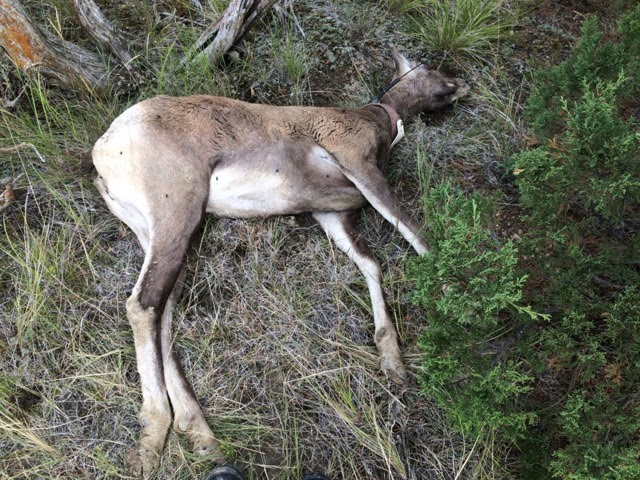
When wild sheep come into contact with domestic sheep wild sheep die. For nearly a century wild sheep in B.C., and all across North America, have experienced massive die-offs due to interactions between domestic and wild sheep. Domestic sheep, goats and even lamas carry pathogens which they are immune to, but are deadly to wild sheep.
Wild and domestic sheep need to be separated
Domestic sheep no longer graze on crown lands, which historically was a major cause of bighorn sheep population die-offs. Currently most interactions happen on farms adjacent to bighorn sheep range in the fall when wild sheep rut. Parts of B.C. such as the Cariboo, East Kootenay, Okanagan, and Thompson are all areas of high risk. In Northern B.C. Thinhorn sheep are naïve to the pathogen, never having been exposed – the risk of widespread population die-offs is extreme.
The BC Wildlife Federation, the Wildlife Stewardship Council, Southern Okanagan Sportsmen’s Association, and the Wild Sheep Society of BC are hosting a town hall in Oliver to educate the public on the risks to wild sheep. Subject matter experts are being brought in to share the history, science and experiences in regards to wild-domestic sheep separation.
Town Hall Meeting: Save Wild Sheep from Deadly Domestic Sheep Pathogens
Where: Elk’s Hall
477 Bank Ave
Oliver, BC
When: May 12, 2016 – 7 pm – 9 pm
Once a wild sheep contracts the bacteria from domestic sheep they often die within days, but not before passing the bacteria on to other sheep in the population. This can have a cascading effect through adjacent populations which results in wide-scale die-offs. In 1999-2000 a die-off killed approximately 65% of bighorn sheep in the South Okanagan. It often takes a decade or more for sheep populations to recover; some populations never recover. There is currently no solution to prevent another die-off.
We need your help to protect these local sheep herds, join us and become part of the solution!