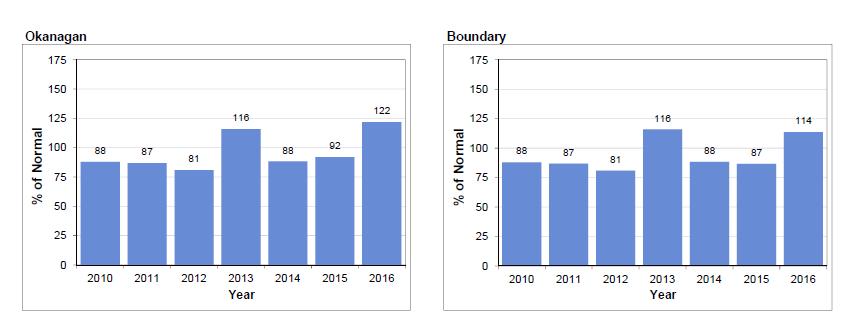
 Okanagan Water Basin – Snowpack at 122% – latest figures released
Above normal snowpack in southern BC including the Boundary area at 114% with the Similkameen at 103% of normal.
By early February, nearly two-thirds of the annual BC snowpack has typically accumulated. At this stage in the season, there are two emerging snow pack trends of note. First is the higher than normal snow packs that are being observed in the Okanagan which are trending towards the potential for elevated seasonal flood risk. Localized areas with high snow pack, such as locations in the Nicola River system, may also be following this trend. The second trend is in well below normal snow packs in northern BC (Peace, Skeena, Stikine, Liard and to a lesser extent Upper Fraser basins). With these low snow packs, combined with the increased likelihood of a warmer than normal spring melt season, there is an increased chance of below normal stream flow, particularly in the late-spring and into summer.
For both spring flood risk and summer low flows, snow pack is just one of the important elements that determine whether or not extreme conditions will emerge. Weather, through the remaining portion of the snow accumulation season, the melt season, and into the summer, is also a key driver on whether or not flooding or low stream flows will occur.
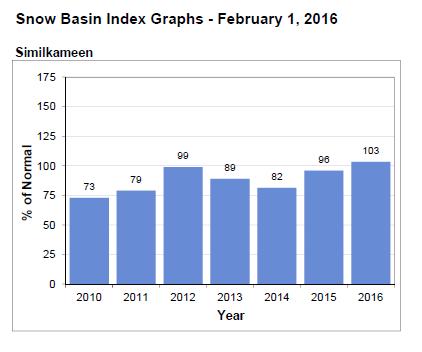
David Campbell, spokesman for the River Forecast center says: In the Okanagan-Kettle region last year, the snowpack was at 92 per cent at this time — and dropped lower after that. Last month, the Okanagan’s snowpack was at 125 per cent of normal, while the Similkameen was at 143 per cent of normal.
Although this year’s high snowpack could be an indication of potential risks of flooding, it is still too early to tell. “Typically, the April survey is when we look the most closely.”
Snowpack
Snow basin indices range from a low of 56% in the Stikine to a high of 122% in the Okanagan.
In general, most of the province has near normal or slightly below normal (80-110%) snow packs for February 1st, 2016, with a provincial average of 91% from all survey locations. A strong south to north gradient of snow pack levels exists, with normal or above normal snow pack in southern BC, lower than normal snow packs beginning in central BC, and extending to well below normal conditions in the north.