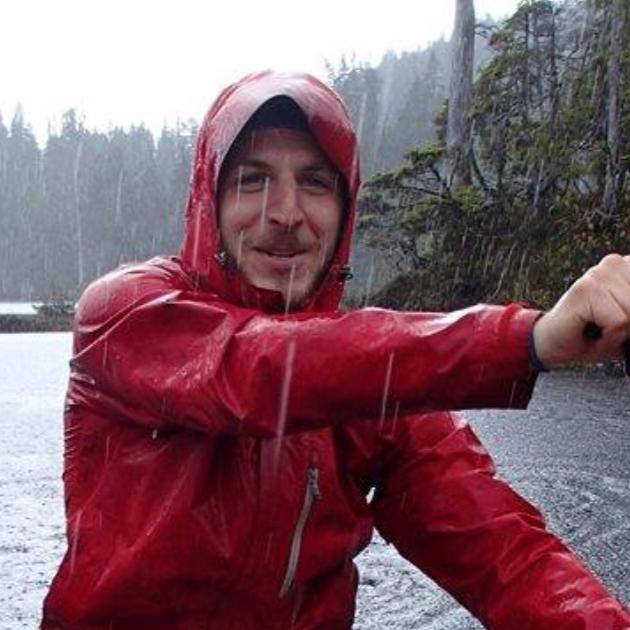
 VICTORIA – This Thursday, the Wilderness Committee’s Vancouver Island Campaigner, Torrance Coste, departs for Paris to attend the highly anticipated UN climate change conference (COP21) as a civil society delegate.
“In my work with the Wilderness Committee, I see the impacts that climate change is already having here in BC, and I know just how critical it is that we act now to address this,” said Coste. “I’m in constant contact with coastal communities and First Nations working to fight off unsustainable industrial projects and create resiliency in an uncertain future, and the opportunity to share these stories and learn from other young climate activists from across the country and the planet is what motivated me to participate in COP21.”
Coste will be part of the Canadian Youth Delegation, a team of 17 young activists from across Canada. The delegation will attend sessions at COP21 and work with other groups and individuals to demand that Canadian and world leaders commit to meaningful action on climate change by signing a legally binding deal at the conference.
The Wilderness Committee opposes the expansion of tar sands, liquefied natural gas (LNG) and coal – as well as new fossil fuel export infrastructure – on the basis that investing in these industries locks BC and Canada into an unsustainable and irresponsible economic model. Canada has a key role to play in global efforts to tackle climate change, and the actions taken here at home will have far-reaching implications on the world stage.
On Sunday, November 29th, the day before the conference begins, the Wilderness Committee will be participating in solidarity marches in Victoria and Vancouver to coincide with similar marches happening in over 1,600 communities around the world.
I’m 26, and I grew up in the South Cowichan Valley on Vancouver Island. My father was a salmon fisherman here on the coast, and seeing that fishery collapse and watching him lose his livelihood had a profound impact on the way I view resource development and the way we manage our environment — though I was much too young to understand this at the time.
I also crew up in constant contact with the outdoors, and pursued courses in environmental studies and geography through highschool and into university.
In my position at the Wilderness Committee (where I’ve been since April 2012), I work closely with coastal communities and First Nations’ groups who are experiencing the impact of climate change and fighting to create resiliency in an uncertain future.
The Wilderness Committee works on a broad array of environmental issues — old-growth forest preservation, salmon conservation, energy, mining, etc. For my part, I work to stop both old-growth logging and ban raw log exports on Vancouver Island, to raise awareness around the threat of oil tankers and climate change in the Salish Sea, to fight off the environment and economy-threatening Raven Coal mine in the Comox Valley, and to work with First Nations to promote a transition away from clearcut logging and other unsustainable industrial practices in Clayoquot Sound.
All of these campaigns are related to and influenced by climate change, and my passion is bring people together to work for solutions that benefit people and the environment, not corporations and private profit.
I live in Victoria with my fiance and remain very close with my family, who are still in the South Cowichan Valley.
I plan to return to Canada with a better understanding around the international discourse on climate change. I firmly believe change will come from the community level, but knowledge of barriers and obstacles at the state and international level will help me inform and empower the communities I’m so lucky to work with.
I’ll also benefit (and already am benefiting) from exposure to other young activists from across Canada and around the world. The breadth of experience, knowledge of different strategies, and understanding about what works and what doesn’t in activism will be an invaluable learning opportunity for me, and I intend to soak up as much of this as I can to become a more effective change-maker here at home.