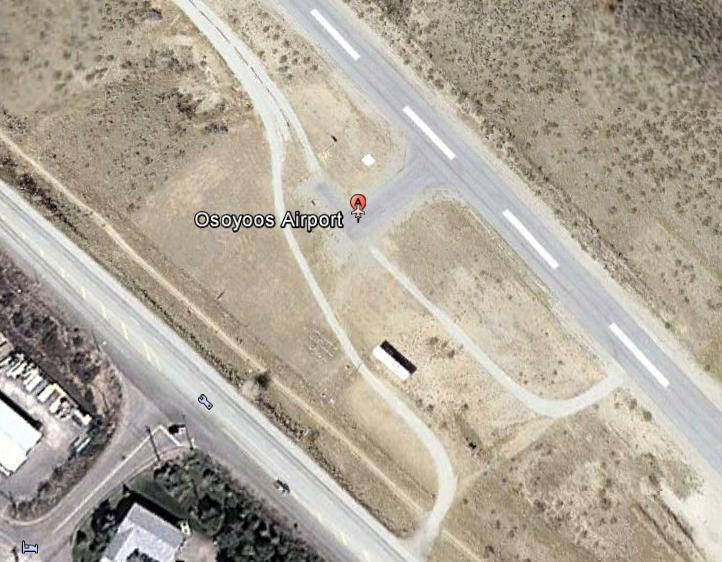
The new board is comprised of:
Glen Harris (Chair)
Tom McHale (Vice-chair)
Jason Bartsch
Diana Thomas
Rob Rausch
Bob Knight
Peter Bueschkens
After the last presentation to Council and subsequently Destination Osoyoos – a steering committee was struck. Their first order of business is to select either InterVISTAS or MMM Group two consultants who responded to a request for proposal to do a business case proposal for the airport (OADS cannot do this as we would appear biased). The steering committee is also tasked with sourcing the funding for this.
Members of the Steering committee are:
Councillor Mike Campol – Town of Osoyoos
Chairman Mark Pendergraft – RDOS
Chris Bower – Nk’Mip Resort Association
Gail Scott – Destination Osoyoos
Glen Harris – Osoyoos Airport Development Society/Watermark Beach Resort
Rob Rausch – Osoyoos Airport Development Society/Sunavia/D.O.
After a previous iteration of Destination Osoyoos under the purview of Glenn Mandziuk secured funding for airport improvements in 2005, the following work was completed:
Phase I – Completed in 2006 $199,000.00 -Tech and prep
Phase II – Completed in 2006 $160,500.00 -Paving
Phase III – Completed in 2008 $159,000.00 -New interaction and Empire Way
Total Invested on the Project to Date $518,500.00
We hope to pick up where others left off provided the Steering Committee produces a favourable report from the chosen consulting firm. Securing the airport would come before any expansion. Growth would be measured and phased. The first step would likely be making the airport secure and usable:
Phase IV – A $408,350.00
Remove and Dispose Existing Concrete Pad
Runway Pavement Marking
Access Road
Parking Lot – Gravel Surface
Airside Security Fence
Airside Security Gate
Airport Terminal Building
75% of funding would come from the 10-Year Transportation Plan ‘BC on the Move’ three year funding. $24 million is available over three years. We have missed the first year, but the next two years have the following amounts earmarked:
2016 – $10 million
2017 – $08 million
The consultant’s report will hopefully identify the most likely sources for the remaining 25% of required capital. There are several viable options that have worked elsewhere and interest in the remaining lots for aviation related actives has been expressed conditional on the full support of the Town preserving the airport for it’s intended purpose. Much of the funds would likely come from the OADS initially.
Previously on ODN
By ROY WOOD
Proponents of the Osoyoos airport were back before town council on Monday looking for about $15,000 to help pay for a business plan for the facility that council had been considering closing altogether.
Glen Harris, president of the Osoyoos Airport Development Society, told council that since it last appeared before council in January, the society has struggled with creating a business plan. The group came to the conclusion that such a task is best left to professionals and have winnowed the field to two contending consultants.
InterVISTAS and MMM Group have made bids ranging from $25,000 to $30,000 to create the business plan, which will look at land use and feasibility.
The society is asking the town to pay for half the fee and to appoint a councillor and/or a staff member to the society’s steering committee.
Harris said, “(The society) “would like to see the town be a bit more on board” with the airport re-development.
Looking at the broader picture, Councillor CJ Rhodes mentioned an earlier report that suggested that upgrading the airport would involve “staggering costs.” He wondered how it would be possible to convince members of the public that such an expense would be worth paying.
Society member Tom McHale told Rhodes that the eventual cost of upgrading the airport would likely be in the area of $5 million, but it would be “down the road five or 10 years.”
Included in the longer-term improvements would be: extending and widening the runway; lighting systems; perimeter fencing; buildings; and miscellaneous costs.
To bring the facility up to “useful” standards in the short term would likely cost between $1 million and $2 million, McHale said.