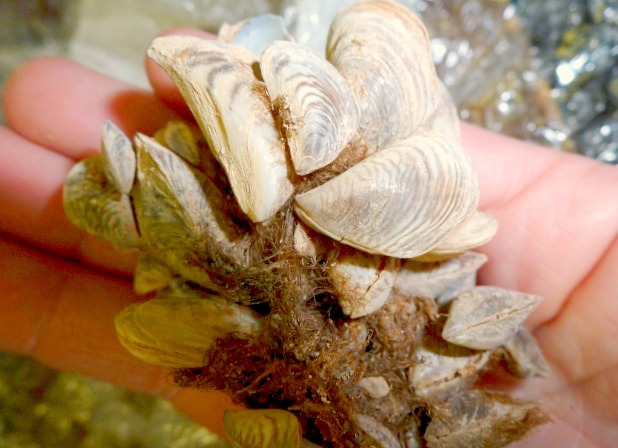
Minnesota Department of Natural Resources and the Minnehaha Creek Watershed District’s (MCWD) Aquatic Invasive Species (AIS) Program requested Zequanox treatment from MBI after discovering zebra mussels near the public boat launch. The non-chemical product approved for use in open water was applied to a 50 by 60 foot containment area with an average depth of 2.5 feet. Before treating, there were approximately 5,000 live mussels in the enclosure. The treatment began on September 8 and eleven days later results showed 100 percent mortality of the zebra mussels in the treatment area.
“We are extremely pleased that Zequanox was so effective in the Christmas Lake treatment,” said Keith Pitts, Vice President of Regulatory Affairs for MBI. “The watershed district and the Minnesota DNR have been great partners, and we’re happy to continue to see proven results for invasive mussel control. It’s a comforting outcome for the public as well, because this solution is more environmentally friendly than other mussel control products and can be administered without harming people, pets or the environment.”
MCWD staff monitored the effectiveness of Zequanox by counting dead mussels over time in the treatment area using collected mussels placed in cages and by searching the area for mussels attached to rocks. Also, they monitored aquariums in a laboratory that held treated water and mussels from Christmas Lake.
“Marrone Bio Innovations has been a key partner in the first phase of our response,” said Craig Dawson, director of MCWD’s AIS Program. “What we’ve learned from the treatment bodes well for future efforts to contain zebra mussel infestations, especially when they’re caught early like the Christmas Lake case.”
Invasive mussel populations are now prevalent in major waterways throughout the country, including the Great Lakes Region as well as the Mississippi, Arkansas, Tennessee and Colorado rivers. The mussels have a significant economic and environmental impact on recreational water use.
Editor’s Note: This treatment must be applied as soon as any mussels detected – prior to a long delay of spreading to other parts of a lake.