Report by Chartered Professional Accountants of BC.
2014 was a good year for the TODR. Population growth and tourism, which are two of the region’s chief economic engines, revived. This translated into service industry job growth, in particular part-time and summer positions that benefitted young workers. US demand for wood products pushed up employment in manufacturing, although forestry jobs declined somewhat. Mining employmentalso increased despite unfavourable market conditions.
As a result, unemployment fell to its lowestlevel since 2008 and both business bankruptcies and consumer insolvencies were significantly reduced. Nevertheless, capital investment fell to its lowest level in seven years.
The outlook for 2015 appears cautiously optimistic for the TODR. Last year’s rebound in population growth was encouraging. Reduced housing inventories and priceincreases have stimulated residential
construction. Whether 2015 can replicate or improve on this growth remains to be seen.
A slower economy in Alberta, which is a major source of both second-home buyers and retirees to the region, will be a factor. The lower Canadian dollar and oil prices should help the tourism sector and
both wood products and mineral exports, although expected reductions in log supply and continuing low mineral prices will challenge local businesses.
Thompson Okanagan 94,1991 square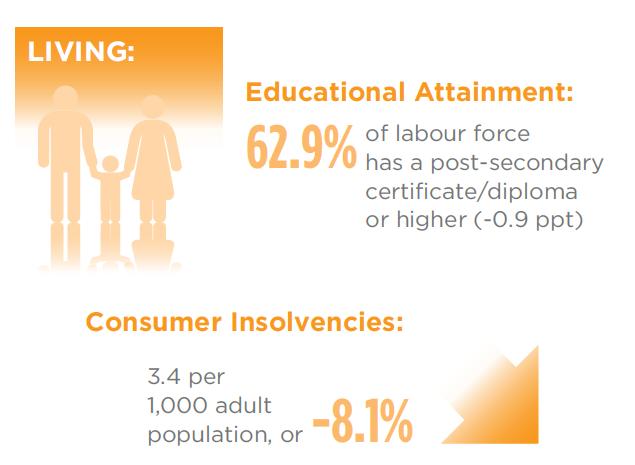
kilometres of land between the Cascade
Mountains in the west and the Monashee
Mountains and Alberta border in the east.
The region has the third-largest population
in the province after the Mainland/
Southwest and Vancouver Island/Coast
Development Regions.
In 2014, the TODR’s population grew
to 539,747 residents, which represents
an annual increase of 1.4% – 2nd highest growth rate
area in the province due to an influx from
other parts of Canada and BC.
The TODR’s economy has evolved over the years from a dependence on forestry, mining, and agriculture to a diverse mix of these traditional industries along with an assortment of manufacturing,
world-renowned viticulture and wine production, and emerging high-tech businesses. It is also a burgeoning centre for post-secondary education. Together, the Thompson River University, Okanagan
College, and UBC Okanagan, attract over 21,000 students annually.4 Due to its favourable climate and scenic appeal, the region is also a popular retirement and tourism destination, which has stimulated
construction and development as well as increased demand for services over many years.
The tourism industry also improved in 2014. Hotel occupancy, regional airport passenger arrivals, and highway traffic volumes all recorded higher numbers than in 2013.7 Wood products manufacturing
benefitted as exports swelled in response to a revival of US residential construction. Mines in the TODR also managed to weather the challenges of declining demand and lower prices as a result of China’s slower economic growth and global oversupply. The net result of these factors was that the region’s labourmarket stabilized, unemployment went down, and total employment increased.