The official name for Okanagan Falls Park is now “sx̌ʷəx̌ʷnitkʷ park.” sx̌ʷəx̌ʷnitkʷ (s-wuh-wuneet-kw) means little falls and signifies a connection to Kettle Falls, which is known as big falls in the nsyilxcen language. These two falls were the most important fishing sites in the Okanagan Nation’s territory.
sx̌ʷəx̌ʷnitkʷ park was also once part of the Osoyoos Indian Band’s reserve lands. The reserve was allotted to the Band for fishing purposes, but was cut off by the McKenna-McBride Royal Commission in 1913.
The place name for McIntyre Bluff is nʕaylintn (Ny-lin-tn). The process to officially restore this place name is underway with the provincial government.
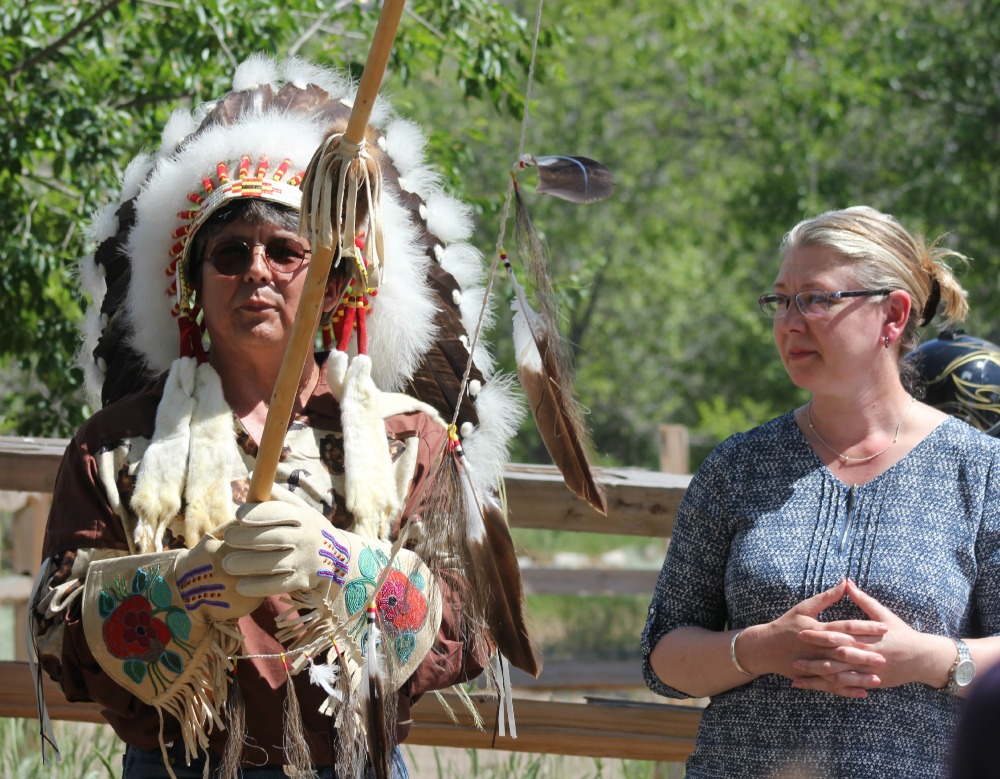 Environment Minister Mary Polak and Osoyoos Indian Band Chief
Clarence Louie celebrated another step forward in their partnership
agreement today announcing the official renaming of Haynes Point and
Okanagan Falls provincial parks to the traditional First Nation
nsyilxcen (Okanagan) place names.
The name changes are part of an agreement made between the Province and
the Osoyoos Indian Band that also sees the Band managing the two parks
and will see McIntyre Bluff become nʕaylintn – officially renamed as well.
“This agreement between the Province and the Osoyoos Indian Band
ensures visitors from around the world can continue to enjoy these
parks and, at the same time, the protection of important archaeological
sites and areas of significant cultural values,” said Polak. “Thank you
to Chief Louie and the Osoyoos Indian Band for working with us to
develop this agreement, strengthening our government-to-government
relationship.”
Haynes Point Park is now officially known as sw̓iw̓s park (swee-yous) which means place where it is shallow or narrow in the middle of the lake. The place name explains how the Okanagan ancestors of the
Osoyoos Indian Band used the area as a very important crossing point
from one side of Osoyoos Lake to another.
The official name for Okanagan Falls Park is now sx̌ʷəx̌ʷnitkʷ (s-wuh-wuneet-kw) which means little falls and signifies a connection to Kettle Falls, which is known as big falls in the nsyilxcen language. These two falls were the most important fishing sites in the Okanagan Nation’s territory.
The park in Okanagan Falls was also once part of the Osoyoos Indian Band’s reserve lands. The reserve was allotted to the Band for fishing purposes, but was cut off by the McKenna-McBride Royal Commission in
1913.
The place name for McIntyre Bluff is n?aylintn (Ny-lin-tn). The process to officially restore this place name is underway with the provincial government.
“Language and place names are of utmost importance to the historical
and cultural identity of people from any region or country,” said Chief
Louie. “The early English and French settlers knew this – some of their
first actions were to rename and map the countries they settled.
I am so proud to know that these names will now be
formally recognized and acknowledged as part of the political, social
and cultural future of this province. On behalf of all Okanagan
(nsyilxcen) language speakers, I want to thank Minister Polak and the
B.C. government for working with the Osoyoos Indian Band in the spirit
of reconciliation and agreeing to bring back these three important
Okanagan Nation place names.”
“The Osoyoos Indian Band has had years of experience operating campsites at their resort in Osoyoos,” said Linda Larson, MLA for Boundary-Similkameen. “This agreement gives the OIB more involvement in
park management and operations that supports long-term protection of important cultural values, while allowing for continued public use and enjoyment.”
Both parks are open, and campers can expect the same recreational opportunities enjoyed previously.
During the transition to the nsyilxcen names, the English names for both parks will be included in local signage.