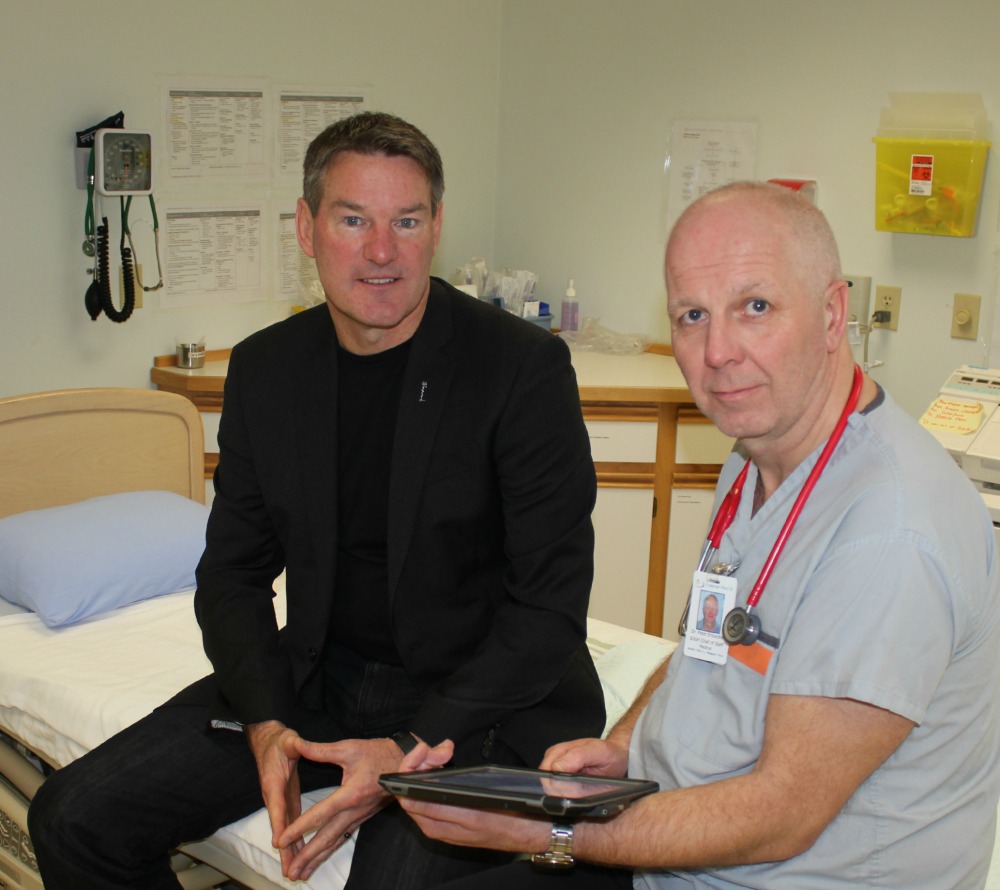
SOGH Chief of Staff Dr. Peter Entwistle (right) and Family Practice Doctor Alan Ruddiman check I-pad interface with E-health system used in the hospital and many doctor’s offices. Entwistle and Ruddiman say Oliver is doing well but not all the bugs are out in integrating all medical practice offices into the new system.
4 doctor’s offices are on 1 system and 2 others are not. Both doctors indicated that rural practice can be a real challenge but that there is much more human contact and concern in the community.
Problems – a few – solutions many. Doctors in the South Okanagan want to communicate issues better and
engage the community. Medicine especially in hospitals has become highly technical and electronic making staff training essential.
On doctor recruiting I was told one out of 3 in BC are not trained in Canada and that Universities here are not training enough. In the next decade 20% of BC doctors will retire – so a recruiting strategy is needed.
There is a tendency for many doctors wanting to work in urban centres and not actually attending on patients in hospitals. Demand for rural doctors is high and many small centres have a problem with retention and recruitment.
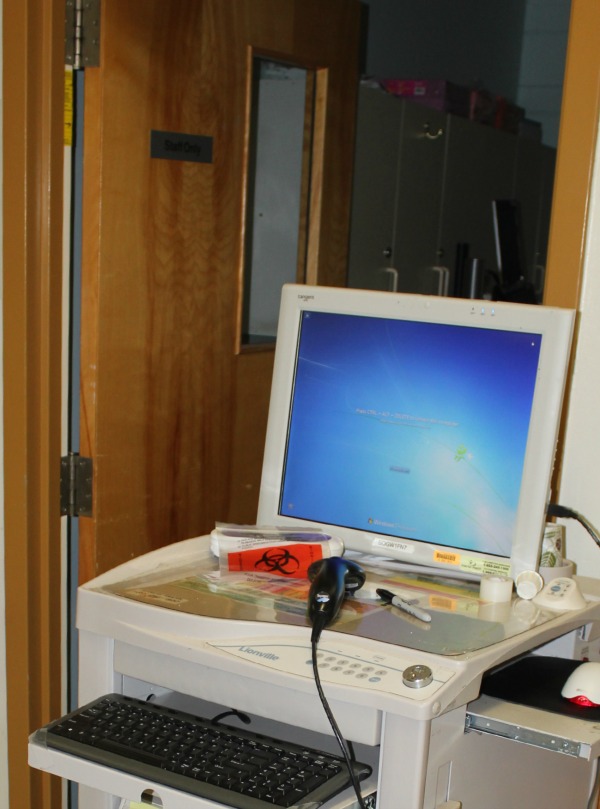
Earlier:
One way of assessing how “digital” a hospital is is through a scale developed by the Healthcare Information and Management Systems Society (HIMSS). It ranks hospitals’ progress in adopting an integrated electronic records system that includes patient records, laboratory and medical imaging systems, and technologies that help doctors and nurses manage and deliver care.
Only 4 Canadian hospitals have achieved Stage 6 on the HIMSS scale as of the end of 2012. None were at Stage 7, the highest category, while 104 were in the U.S.
The four Stage 6 hospitals in Canada include – the South Okanagan General Hospital at Oliver BC