 The 2013 BC Adolescent Health Survey was administered to almost 30,000 public school students across the province.
It provides a comprehensive look at the health of youth aged 12–19.
Between 2008 and 2013 the percentage of students speaking a language other than English at home increased, while the percentage of students who lived with their parents and those who identified as completely heterosexual decreased.
The survey also showed that youth are generally making better choices about risk behaviours than they have in previous years. For example, a lower percentage of students reported having tried tobacco, alcohol, marijuana, or any other substance than their peers five and ten years ago. They were also more likely to engage in injury prevention behaviours, such as always wearing a seat belt and not driving after drinking. These choices may also be reflected in better health outcomes: Students were less likely to have had a sexually transmitted infection or to have been pregnant or caused a pregnancy, and a smaller percentage reported serious injuries than in previous years.
The percentage of students who had been physically or sexually abused remains fairly constant at about 15%.
24% of students slept at least nine hours on the night before they took the survey, and most used their phone or the Internet after they were supposed to be asleep Youth’s responses to questions about their mental health were particularly worrying, especially among females, who were more likely than males to report extreme stress, extreme despair, self-harm, suicidal thoughts, and suicide attempts.
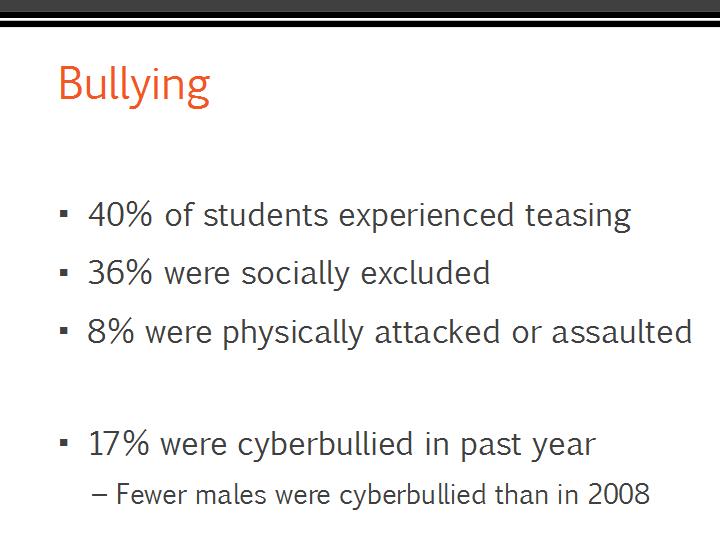
Students in 2013 were less likely to be cyberbullied than in 2008, but were more likely to be teased or socially excluded than reported previously. Twenty-four percent of students admitted that they had bullied someone either in person or online. Females were more likely than males to be the victim of most forms of bullying, with14-year-olds being particularly vulnerable.
While injuries overall have declined, 16% of youth had experienced a concussion in the past year. Yet adults may not be taking these injuries seriously.
Obesity is a major health concern in Canada. A larger percentage of youth were obese than in previous survey years, and only 17% of students aged 12 to 17 met the Canadian guidelines of an hour of moderate to vigorous physical activity every day.
Positive protective factors for BC youth included physical activity; good nutrition; getting at least nine hours of sleep; feeling safe at home, school, and in their neighborhood; participating in cultural activities; having supportive adults and peers; having a sense of competence; and feeling listened to and valued. based on an executive summary with some editing