“Generally speaking, full Moons occur near perigee every 13 months and 18 days, so it’s not all that unusual,” he says. “In fact, just last year there were three perigee Moons in a row, but only one was widely reported.”
In practice, it’s not always easy to tell the difference between a supermoon and an ordinary full Moon. A 30% difference in brightness can easily be masked by clouds and haze. Also, there are no rulers floating in the sky to measure lunar diameters. Hanging high overhead with no reference points to provide a sense of scale, one full Moon looks about the same size as any other.
NASA science news
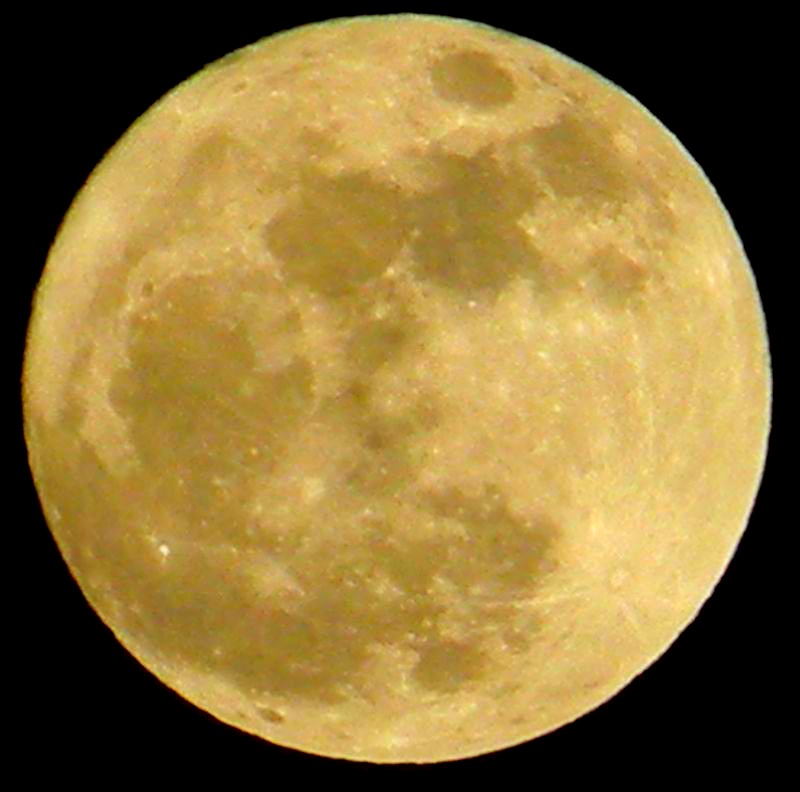 A supermoon is the coincidence of a full moon or a new moon with the closest approach the Moon makes to the Earth on its elliptical orbit, resulting in the largest apparent size of the lunar disk as seen from Earth. The technical name is the perigee-syzygy of the Earth-Moon-Sun system. The term “supermoon” is not astronomical, but originated in modern astrology. The association of the Moon with both oceanic and crustal tides has led to claims that the supermoon phenomenon may be associated with increased risk of events such as earthquakes and volcanic eruptions, but the evidence of such a link is widely held to be unconvincing.
The most recent occurrence was on 30 January 2014. The closest supermoon of 2014 will be on August 10.