 12 recommendations:
- The Liquor Distribution Branch (LDB) should improve its marketing of BC liquor products in stores, developing new opportunities for product placement and innovative promotional and educational materials.
- Government should work with industry and tourism associations to develop promotional materials such as maps, apps and brochures on BC wineries, breweries and distilleries.
- Government should work with other Canadian wine-producing jurisdictions to jointly develop thematic wine promotions in each jurisdiction’s liquor stores to promote Canadian wine.
- Government should discuss establishing a quality assurance program for BC craft beer and artisan-distilled spirits (similar to the VQA wine program).
- Manufacturers should be able to establish low-risk tasting venues such as a picnic area as part of their existing licence without the need to apply for a specific endorsement. Government should work with industry, local government and First Nations to increase flexibility for tasting options for manufacturers while being sensitive to potential negative impacts, such as noise, on the community.
- Allow manufacturers to offer patrons liquor that was not produced on site (e.g., a winery could sell a beer to a visitor).
- Government should consult with the Agricultural Land Commission about amending the Agricultural Land Commission Act regulations to allow manufacturers operating within the Agricultural Land Reserve to allow more people in consumption areas (e.g. lounges) and to sell liquor that was not produced on site.
- Government should consult with industry and review the minimum requirements to obtain a brewery, winery or distillery licence. Government should also consider how these requirements are regulated by LCLB and LDB to ensure transparency and an effective regulatory system.
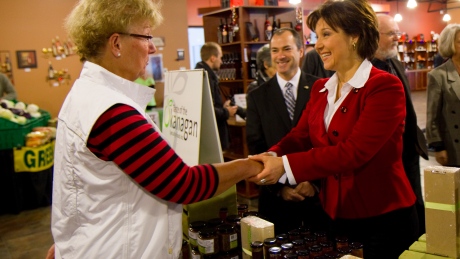
- Government should permit BC liquor manufacturers to offer products for sample and sale at temporary off-site retail locations (e.g., farmers’ markets), with appropriate conditions. The decision about whether to allow vintners, brewers and distillers to showcase their products at a particular location will be left to the location management (e.g., farmers’ market association).
- Allow patrons to buy bottles of liquor to take home that are showcased at festivals or competitions. Consider amending SOLs issued to festivals and competitions, or allow BC Liquor or private retail stores to operate a temporary store on site as the means to provide for these sales.
- Allow manufacturers to have off-site locations where they can sample and sell their products to the public (e.g., permanent tasting rooms in a downtown store).
- Provide a more streamlined and time-sensitive application process to allow facilities such as ski hills and golf courses to temporarily extend their licensed area to another part of the property (e.g., a patio near a ski-hill gondola lift or a temporary patio near a golf clubhouse).
Quick Facts about liquor in BC
- B.C. currently has 269 wineries, 76 breweries and 27 distilleries.
- B.C.’s liquor industry, a leading contributor to tourism, is worth $2 billion in economic impact, according to the BC Wine Institute, and every bottle of wine produced in B.C. is worth $42 in economic impact.
- B.C.’s wine industry alone brings in more than $298 million in federal and provincial taxes and Liquor Distribution Branch mark-up.
- B.C.’s tourism revenues are valued at more than $13.4 billion annually.
- More than 126,000 people work in the tourism in B.C. – that’s almost one in every 15 jobs.
Manufacturers and consumers – tourists and locals alike – will benefit, as B.C. provides increased flexibility around licensing. Manufacturers will be able to sample and sell their made-in-B.C. liquor at venues such as farmers’ markets, festivals and off-site tasting rooms.
“We promised to bring British Columbia’s liquor laws into the 21st century – to give consumers more choice, give B.C. businesses more opportunities to grow, while ensuring health and safety,” says Premier Christy Clark. “These changes are a step towards that.”
Source: Photo CBC Handout: BC Government