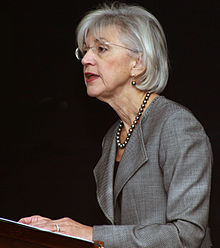
 Supreme Court of Canada Chief Justice Beverley McLachlin says the most pressing challenge facing the administration of justice in this country is ensuring that Canadians are able to access the system.
“We know that there are a lot of needs. People just swallow their pain and their loss and live with it, I guess, in some unsatisfactory way feeling they can’t get justice,” said McLachlin.
“We are contemplating changes to the system to make it more affordable. For example, rule changes. All of that involves the government McLachlin said.
A 59-page report, released Sunday at the conference of the Canadian Bar Association says there is profoundly unequal access to justice in Canada.
Among other things, the report calls for more federal funding for civil legal aid.
The report says by 2020, all Canadians living at and below the poverty line should be eligible for full coverage of essential public legal services.
Hardest hit are those who can’t afford lawyers.
“Inaccessible justice costs us all, but visits its harshest consequences on the poorest people in our communities,” the report says.
Its author, Melina Buckley, says one of the biggest concerns is the growing number of people who represent themselves in civil cases.
Buckley says many people earn just enough money so they don’t qualify for legal aid, but they also don’t make enough to pay for a lawyer. Those people often find themselves on their own in court, she says.
The problem is especially pronounced in family law cases.
“They describe that as just being a terrible experience,” Buckley said in an interview.
“They find the whole process leading up to it is hugely stressful, has all kind of side effects in terms of their abilities to continue parenting their kids because they’re stressed. Sometimes they lose their jobs or have to go part-time, all kinds of health and other situations. They tend to get alienated from friends and families because they become so obsessed by it,” she said. “And then quite often they don’t have the kind of outcomes that we would consider just and fair.”
Buckley said that also puts more of a burden on the system.
For example, a case that would normally take three days with a lawyer on each side, tends to instead take 10 days, she says.
The report identified four priorities in improving access to justice nationally: access to legal services, the simplification of court processes, family law and prevention, triage and referral.
CBC files, picture from Wikipedia