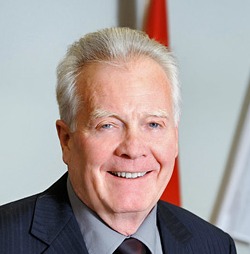
 Answers to questions asked by Oliver Daily News of NDP candidate for nomination Brian Taylor Mayor of Grand Forks
#1 I have announced my intentions and filed my papers requesting approval as a candidate on Feb 6 awaiting a response from the Party
#2 I have worked for most of my life for boards of directors. I was part of the union organization that brought CUPE into the Toronto Children Aide Society in the mid 70’s. This is my third term as mayor in Grand Forks but in between I have spent many years working as a volunteer.
#3 Many issues face small communities in BC, and it is difficult to pick just one. Long term the most important issue is federal and provincial governments sharing the cost of keeping water running clean and keeping toilets flushing and roads travelable. This riding is rural but also a collection of small towns. Even if we are responsible, analyse the problem and plan to pay our municipal share, we are not able to afford the future without federal and provincial partners.
Short term, I must pick health care. I am pleased at Adrian Dix’s attitude to “doing politics different”. Different, when it comes to health care is not throwing the good or necessary decisions out because they come from the Liberals. For instance we cannot afford to have all specialized services available everywhere however we can have a better system of moving people to the service, i.e. ambulance helicopter and fixed wing services. The other frustration for our communities is the model of health care. A model that expects feedback to come to Interior Health from municipally elected officials. Communities want Health Care to answer to them directly and explain their decisions face to face.
#3a Most of The BC’s job strategy is not working in our riding. The three big nursery operators have tapped the available local market and have still for the past 5 years brought in Mexican labor. Part time jobs are snapped up by early retirees who are short of income or just bored being at home. Care aid jobs are going unfilled as Selkirk College does their best to offer upgrades to local citizens. On the positive side of the ledger apprenticeship programs are working for some young people but for many this means leaving the community for training in Vancouver or Kelowna. More money on subsidies to youth and less on selling us on how well the government is doing.
#4 Poverty is experience throughout the riding. Many people have moved to Cawston to Keremeos, Hedley and Grand Forks because we were and are welcoming communities where rents were affordable. The key words is ‘were affordable’. As home and property values increase so does the cost to the owner and to the renter. Along with the unemployed and working poor another major factor is the sad state of BC’s ministry of Mental Health and Substance Abuse. Until we address the underlying causes behind our disenfranchised citizens the least we can do is respect the right to food.
#5 One option to including social housing units in new housing projects. The challenge is to make it affordable and attractive to the developers. The problem we often create in our enthusiasm to provide social housing is the creation of social housing ghettos. One simple solution is to provide more in the “shelter” portion of assistance funding, allowing individuals to rent in the open market. Here in the Boundary a modest single apt rents for $600 plus utilities, while the shelter payment are fixed at much less forcing individuals and sometimes families into substandard housing or a choice between food and shelter.
#6 I sit on the West Kootenay Hospital Board and the big push is to pretax and establish a fund for future expansions. The fight here is between Nelson Castlegar and Trail. Each one of these communities sees themselves as the next large hospital expansion. In fact we cannot afford a full service hospital in every community. What we need are long term plans and strategies from Interior Health. The absence of long term science based planning by IH is pitting communities against each other.
#7 This government has lost the support and the trust of the people. The only way to turn this around is to do the job differently. My party needs to make the hard business decisions and stand in front of constituents and explain the reasons and take the criticism. Sliding in new taxation on a number of services and commodities angered British Colombians and caused the rejection of the HST. In fact there are a number of advantages to a harmonized system of taxation. The referendum was an expression of anger at being kept in the dark and not allowed debate and dialogue. Everyone in the current Liberal government has been tainted by the collective behavior and nothing short of a change of government will remedy the problem.
#8 I would like to say loudly and clearly, let us not forget the beautiful and fragile environment that we are blessed to live in. I was born in Oliver and spent much of my younger years in Keremeos and the South Okanagan. I remember what we have already lost. I am committed to keeping chemicals out of our food and water and I support organic farming methods. I support wood lots over the control of multi-national logging companies and I want cattle out of environmentally sensitive crown land particularly headwaters and riparian areas.
Who is Brian Taylor?
Contact Information
Brian Taylor 5665 Spencer Rd Grand Forks, BC V0H 1H5 Ph 250-443-4177 bct6007@gmail.com
History
Brian was born in Oliver in 1946 grew up in the South Okanagan and Similkameen. His grandfather and father both managed fruit co ops in the south Okanagan. Brian managed non profit societies for 20 years. In the 1983 provincial election he represented the NDP in the Central Okanagan. He was elected as mayor in Grand Forks and served from 1997 to 1999 and again from 2008 to the present He was the leader of the BC Marijuana Party and published a successful international magazine. Brian has been an active and tireless community volunteer, ran the Fall fair, served as president of the Chamber of Commerce and the Boundary Lodge Housing Society. Along with his mayorial responsibilities he also serves as a director on the Regional District of Kootenay and the Regional Hospital Board. Brian has two daughters and two grand children and lives on a small farm just outside of Grand Forks.
Principle Areas of Expertise
Labor Relations: Executive Director of non-profit organizations for 22 years Provided personnel function for up to 85 employees Successful managed both union and non-union environments
Financial Control: Managed fiscal resources from multiple funding sources totaling million of dollars Personally managed several accounting systems in small business
Consultation and Planning: Provided planned growth to allow expansion of client services Provided management services to organizations and clubs Provided services to new emerging non-profit societies: Co-ops and Limited Companies
Fundraising: Managed first public gaming in British Columbia Generated over 3.5 million dollars in 5 years Successful grant history with provincial and federal ministries and foundations
Media Relations and event co-ordination: Coordinated five telethon campaigns with media throughout the interior of British Columbia Staged numerous fund raising entertainment events Coordinated press releases and media contact relating to special events, and issue management Co-produced numerous promotional and educational productions Directed and produced two, twenty-two minute videos Started a successful international magazine
Program Development: Developed innovative programs in the areas of daycare, parent support and community living Successful challenged government to fund essential levels of services to children
Employment History
2008- current ~Mayor of Grand Forks
2004 – 2006 ~Private Consultation, workshops, seminars
2002 – 2004 ~Editor and founder of Cannabis Health Journal
1997 – 1999 ~Mayor of Grand Forks
1993 – 1997 ~Executive Director Broadacres Association for Community Living Closed and cleared the title of “Broadacres Residence” Reorganized services to provide more personal service
1983 – 1993 ~Executive Director Central Okanogan Child Development Association (The Okanagan Neurological Association Kelowna, BC) Guided the development from a small rural agency to a multi-service organization providing some of the most progressive and innovative services to children in the Province of British Columbia
1978 – 1983 ~Executive Direct Kelowna and District Society for Community Living As the organization’s first Executive Director, promoted individual community living, employment, self-advocacy and the closure of institutions
1981 ~Executive Director (5 month) Beaver Lodge Oliver, BC Seconded to stabilize a crisis and assist with the recruitment of an Executive Director
1970 – 1978 ~Child Care Supervisor Metro Toronto Children’s Aid Society
Education
1993 Intro MBA Gonzaga University, Spokane, Washington
1975 – 1978 BA Psychology York University, Atkinson College, Toronto, Ontario
1974 – 1975 Advanced Studies in Child Care George Brown College of Applied Arts, Toronto, Ontario
1970 – 1971 Child Care Worker Certificate Centennial College Toronto, Ontario
1965 High School Graduation Vancouver College