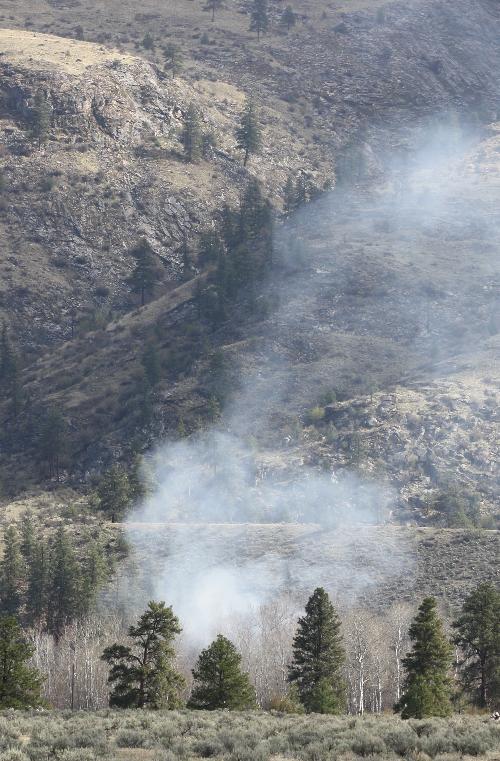
 Every morning, as a firefighter, we get a radio check to make sure our pagers and radios are still in contact with those at dispatch, during this radio check when the dispatchers are calling us they let us know whether or not burning is allowed via a Venting Index.
This index is not just for our knowledge but for the public as well so they are aware of whether or not they can or may burn on that day, the problem is, is that not every one has a radio or pager or even a scanner to hear this report.
At this site you will find the VI report as well as the wind speeds for the day and the following day as well IE:
(district) Okanagan
(morning rating – elevation) 25/Poor/11 739
(afternoon rating – elevation) 38/Fair/4 1956
(evening rating – elevation) 19/Poor/1 2373
So first is obviously the location of the index, after that is the rating for the index, now this rating is given on a scale of 0 – 100.
00 to 33 is poor ventilation,
34 to 54 is fair ventilation,
55 to 100 is good ventilation.
Beside the rating is a basic descriptor of the numerical rating, after that is the wind speed in kms, and last is the current mixing height in meters above sea level, simply put , the height of the vent-able ceiling for the smoke. The lower it is the closer the smoke is to staying along the ground and preventing the visibility and healthy air for us to breathe.
The Venting Index is a term used in air pollution meteorology. (It is also known as the Ventilation Index.) The Ventilating Index is a numerical value related to the potential of the atmosphere to disperse airborne pollutants, such as smoke from a prescribed fire. It is based on both the current wind speed in the mixed layer and the mixing height. The mixed layer is the surface layer of air that is turbulent and well mixed. The mixing height is the thickness (sometimes zero) of this mixed layer.
These category boundaries differ in some jurisdictions. For example, in the Regional District of Central Okanagan, the range of the “GOOD” ventilation category is currently 65 to 100. A ventilation index of 0 implies no ability of the atmosphere to disperse pollutants (smoke), while a value of 100 implies an excellent dispersion ability.
On that note here is the web site:
http://www.weatheroffice.gc.ca/forecast/textforecast_e.html?Bulletin=flcn39.cwvr
Thank-you for reading and I hope this has bettered your knowledge on the venting index
Written by: Daniel Knelsen (member of the Oliver Fire Department
Resources provided by
www.weatheroffice.gc.ca/canada_e.html
www.bcairquality.ca/readings/ventilation-index.html