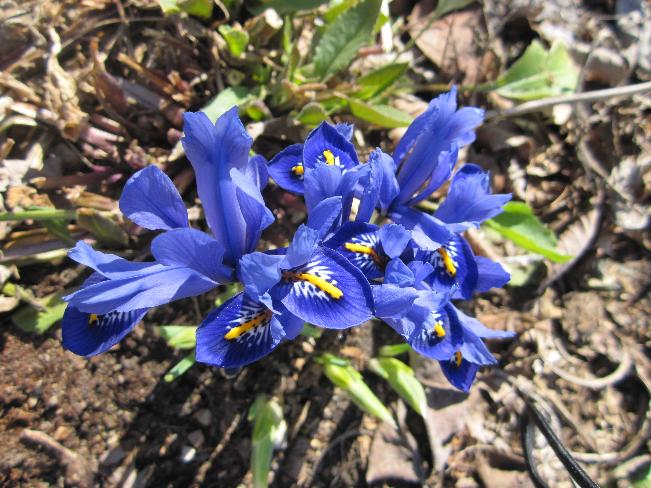
 This week I was planning to write about the wonderful little bulb the Iris reticulate which you can see in this first photo. But then I went back into the garden yesterday morning to discover they had all been eaten by the deer!
Spring bulbs can be tricky. Last year I lost most of my tulips but I thought I was safe planting these early flowering miniature members of the Iris family as all the books and Internet sources say they’re deer resistant. I guess the hungry deer in Oliver don’t read or go online to discover what’s good to eat.
So instead, this week will feature another low-growing flower, the little violets that flourish throughout the Okanagan. While some gardeners might regard these delightful blue-purple flowers as weeds, they certainly have a place in many gardens such as those in the second photo blooming in a garden on Bellevue Drive. 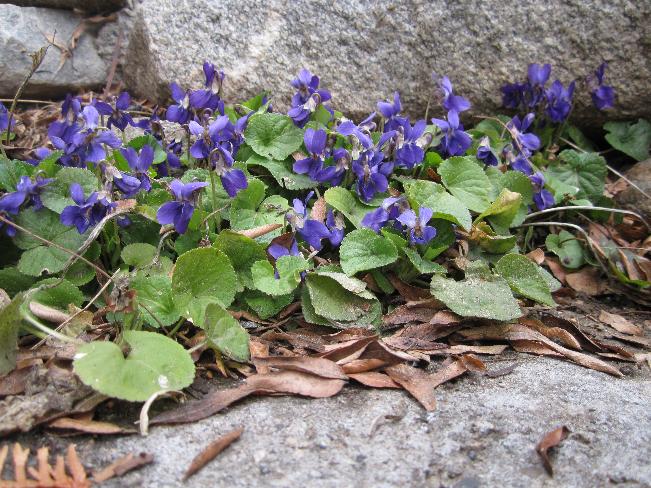
These violets are part of a large genus called Violas which features between 400-500 species and includes many familiar flowers from violets and violas to winter pansies, Johnny Jump-ups and hearts-ease. (Surprisingly, the well known house plant the African violet is actually a Saintpaulia and not even a close relative to the real violets.)
The violets growing in my garden appear to be the dog or wood violets, while the ones in the photo are most likely the Viola odorata or sweet violet. Like most violas the flowers have five petals held above the runners and rosettes of heat-shaped scalloped leaves. In the afternoon, when the sun has warmed the blossoms, the sweet floral scent of the Viola odorata seems to fill the air as you walk by. Sweet violets were especially popular during Victorian times when women carried small bouquets or nosegays to symbolize faithfulness while the larger pansy flowers were said to symbolize thoughtfulness.
Though mostly shade and semi-shade loving they will even grow well in dry shade making them a useful ground-cover especially under taller plants. They are particularly striking growing under early flowering shrubs or even bulbs such as daffodils which contrast their violet colour with the dafs’ bright yellow flowers. Though you can start them from seed, they spread easily by means of runners to create a carpet of leaves and flowers each spring. They are perennials which means they will come back each year and it’s their spreading habit which some gardeners consider invasive though they are easily controlled in the garden.
This is the latest in a series of blogs featuring the variety of plants flowering throughout the year in Oliver. Do you have a flower in your garden you would like to see featured or one you’d like to know more about? Contact Wendy Newman at wbnewman@shaw.ca or visit my gardening blog