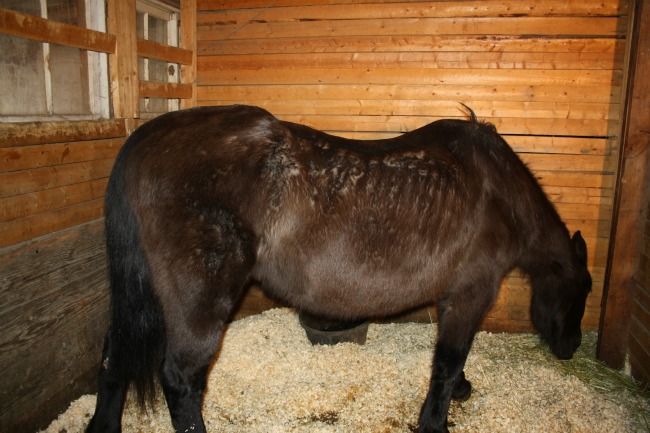
This horse was found this week near Shrike Hill, emaciated, and in dire need of proper care. Skin and bones.
According to Ken MacRae, this quarter horse has lost about 400 pounds of needed body weight and was very weak when found. I will call the horse “Friendly” as no one knows who owns it or would care to claim it.
“Friendly” because he allowed me to feels his sides and get close for photographs in a tight stall. He is currently being housed at the D Bar K Ranch on Sawmill Road. www.dbarkranch.com
If you can help – phone Dawn or Ken at 498-0636
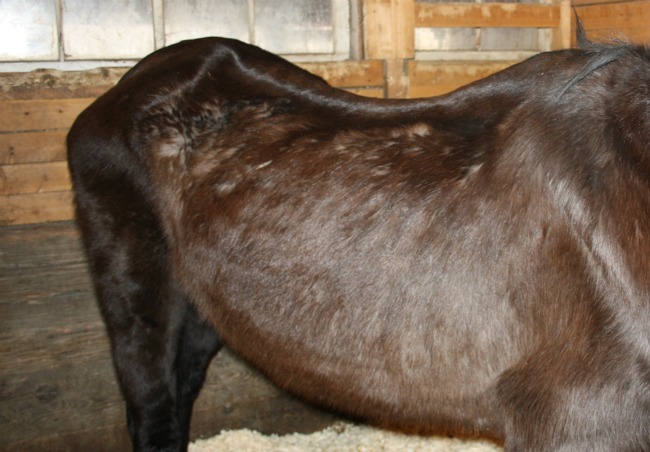
The appearance and effects of emaciation in animals, both wild and domestic, is like that of humans–severe thinness, loss of fat and muscle, extremely pronounced and protruding bones, and weakness. Starvation and regularly dehydration, brought on by neglect and cruelty from humans, or as a result of illness are the usual causes of emaciation in domestic animals like dogs, cats and horses; in wild animals, starvation with emaciation is caused by unavailable sources of food, loss or changes of habitat, or neglect in captivity. The rehabilitation of emaciated animals, through treating their starvation and dehydration with slow renourishment, can be challenging. – source wikipedia