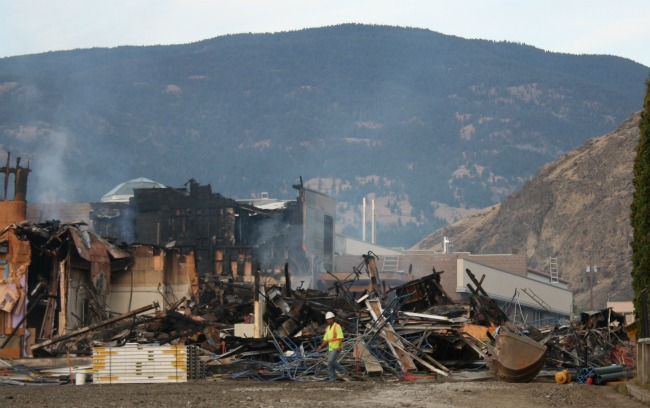
Picture taken Tuesday morning – smoke and steam have diminished in last 12 hours – nothing visible from a distance.
The IHA Medical Health Officer, Dr. Rob Parker, has reviewed the situation in Oliver with town officials, and provides the following advice. The current warm weather due to a high pressure ridge tends to cause temperature inversion which can trap smoke in mountain valleys, and this seems to be what is happening in Oliver following the major high school fire that occurred earlier Monday. While Oliver doesn’t have a BC Ministry of Environment air quality monitoring station, based on the verbal visual reports of smoke, people reporting symptoms and previous experience with major building fires, the estimated air quality for Oliver is likely in the moderate to high risk range for causing symptoms (Air Quality Health Index range 4-10). As such, the Medical Health Officer advises those who are at greater risk of having respiratory symptoms to reduce their outdoor exercise and activities until the air quality improves. Those more at risk of developing breathing difficulties include pre-schoolers, seniors and those with pre-existing chronic heart and lung conditions, including asthma. Even for otherwise healthy older children and adults, poor air quality can cause irritant effects to the eye, nose and throat, and cough and lung irritation. If the smoke levels around one’s home are causing breathing difficulties, then temporary relocation to a friend or relative’s home is sometimes an option. Anyone with a pre-existing heart or lung condition with significantly worsening symptoms should seek medical attention.
While the high school was under renovation, Dr. Parker advises the main health issue from the fire will be the small organic particulate matter that results anytime wood products such as building structural material are burned. Other building materials burned in the fire should not present any ongoing health risk to the general public.
statement prepared by the Mayor’s Office – Town of Oliver